

A bilingual notary service appointment is defined as a scheduled notarization session where the notary or a coordinated translator can communicate in both English and a second language, such as Spanish, to confirm that you fully understand what you are signing. For Spanish speakers and immigrants handling legal documents in Florida and across the U.S., getting this appointment right the first time saves hours of rescheduling and potential legal complications. This guide covers every step of the process: what to bring, how to choose the right type of bilingual service, how to book correctly, and what mistakes to avoid. Whether you are notarizing immigration forms, family law documents, or business paperwork, the preparation steps are the same.
What are the requirements for a bilingual notary appointment?
Every bilingual notary appointment rests on three non-negotiable requirements: valid government-issued photo ID, complete unsigned documents, and the physical or verified digital presence of every signer. TD Bank and the Brooklyn Public Library both require all signers to be present with valid ID and complete documents, and late arrivals risk outright cancellation. That rule applies universally, whether you are walking into a notary office in Naples, Florida, or joining a remote video session.
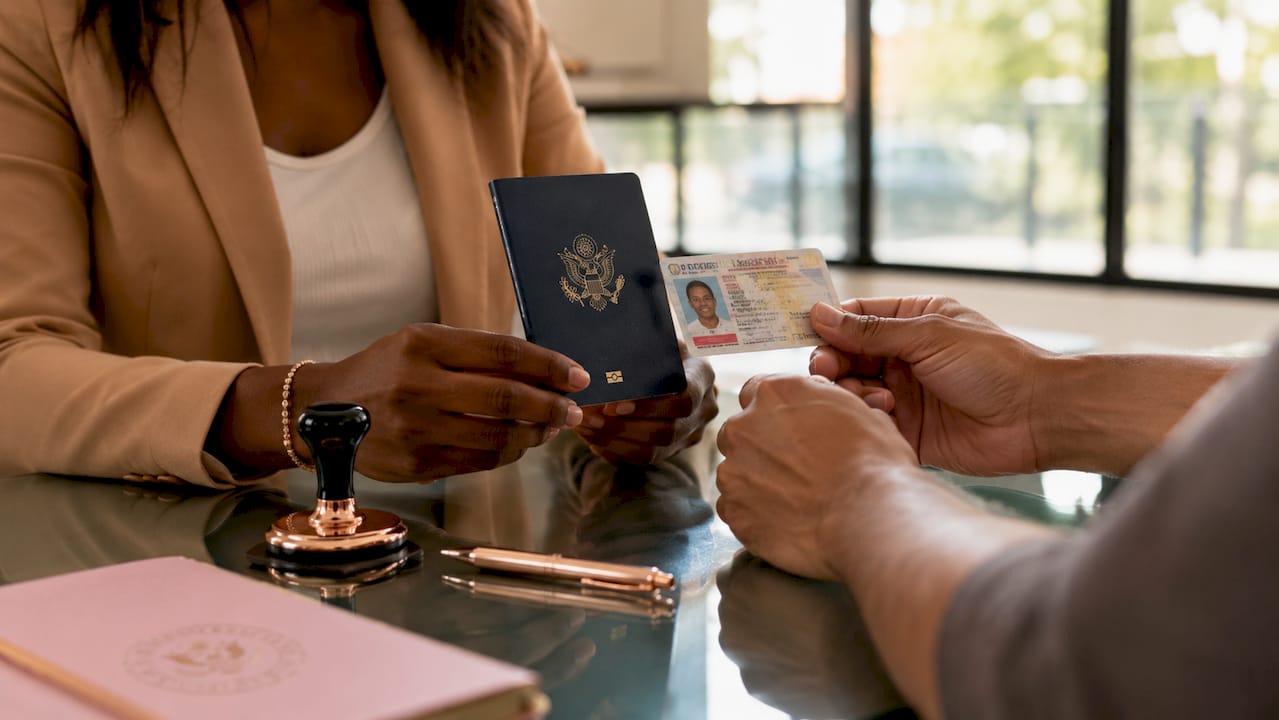
What counts as valid ID
A U.S. passport, state-issued driver's license, or permanent resident card all qualify. The ID must be current, government-issued, and include your photo. Expired IDs are rejected without exception.
Documents must arrive unsigned
The notary's entire job is to witness your signature. Bring your documents complete but unsigned. If you sign before the appointment, the notary cannot legally notarize the document, and you will need a new copy.
Here is a quick comparison of what each workflow requires:
| Requirement | Bilingual notary (direct) | Certified translation workflow |
|---|---|---|
| Language support | Notary speaks your language | Certified translator prepares translated document first |
| Document language | Usually English | Translated copy submitted alongside original |
| Timeline | Same session | Translation adds days or weeks before notarization |
| Cost structure | Single notary fee | Notary fee plus separate translation fee |
| Best for | Verbal communication only | Documents requiring foreign-language legal record |
Key preparation items to bring to every appointment:
- Government-issued photo ID (passport, driver's license, or green card)
- Complete, unsigned documents
- Any supporting paperwork referenced in the main document
- Payment for notary fees
- Contact information for any absent parties who may need to sign remotely
Pro Tip: Call your bilingual notary provider at least 48 hours before your appointment to confirm whether they speak your language directly or whether they coordinate a certified translator. These are two different services with different timelines and costs.
How to choose between bilingual and multilingual notarization with certified translation
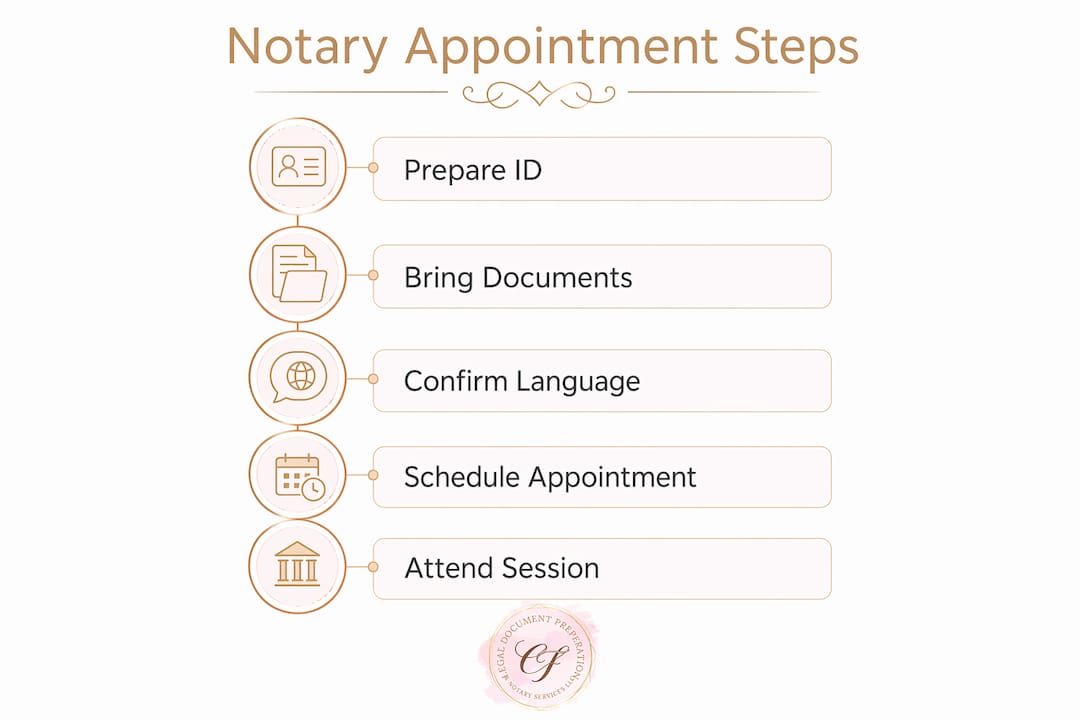
The distinction between a bilingual notary and a multilingual notarization with certified translation is one of the most misunderstood points in the entire notary appointment process. A bilingual notary speaks your language and can communicate with you directly during the session. A multilingual notarization with certified translation means a separate credentialed translator has already converted your document into the required language before the notary ever sees it.
Some providers distinguish between languages they support directly, such as Arabic or French, and languages like Spanish that may require certified translation depending on the document type and jurisdiction. This matters because certified translation must be coordinated before notarization, and signer comprehension of the document's nature and effect must be confirmed prior to signing.
When certified translation is legally required:
- When the document will be submitted to a foreign government or court
- When the document is written entirely in a language other than English and must be filed with a U.S. agency
- When the jurisdiction or institution receiving the document explicitly requires a certified translated copy
- When the signer cannot read the document language at all and verbal explanation alone is insufficient
A notary's role is to verify identity and witness a signature. The notary cannot translate, interpret, or explain the legal meaning of a document. If you do not understand what you are signing, the safest and legally correct step is to obtain certified translation before your appointment.
Pro Tip: Before booking any appointment, ask your provider two direct questions: "Do you speak Spanish?" and "Does this document require certified translation?" The answers determine your timeline and total cost.
Step-by-step guide to booking a bilingual notary appointment
Booking a bilingual notary appointment correctly prevents the most common failure point: arriving unprepared. Follow these steps in order.
- Identify your document type. Know whether you are notarizing an immigration form, a power of attorney, a real estate document, or a business filing. Document type determines which notary services apply and whether certified translation is needed.
- Search for a bilingual notary provider. Look specifically for providers who list Spanish or your language as a direct service. Cflegalformhelp, for example, offers mobile notary services in South Florida with bilingual English and Spanish support.
- Ask the right questions before booking. Confirm the languages the notary speaks, the maximum number of documents per session, whether remote online notarization is available, and the total fee.
- Choose in-person or remote online notarization. Remote online notarization (RON) involves additional identity proofing steps including knowledge-based authentication (KBA), live video verification, and government ID scanning. These steps differ significantly from in-person procedures and require technology preparation on your end.
- Prepare your documents. Complete all fields, leave signature lines blank, and make copies of everything you are bringing.
- Confirm your appointment in writing. Request a confirmation email or text that includes the date, time, location or video link, and the list of required documents.
- Arrive or log in early. Missing ID, incomplete documents, or late arrival are the top reasons appointments fail. Give yourself a 10-minute buffer.
For remote sessions specifically, test your equipment at least one day before the appointment. A clear camera, stable internet connection, and proper document display are all required for a compliant remote notarization session in Florida. You can review what documents qualify for remote sessions in the Florida remote notary guide published by Cflegalformhelp.
Pro Tip: If you are using a mobile notary service, confirm the travel area and any additional fees before the appointment day. Some providers charge per mile outside their primary service zone.
Common challenges Spanish speakers face in bilingual notary appointments
The most frequent challenge Spanish-speaking clients face is not a language barrier during the appointment itself. It is arriving without a clear understanding of what the notary can and cannot do. Notaries cannot translate, interpret, or provide legal advice to non-English speakers. The signer must understand the document's nature and effect before signing, but the notary is not the person responsible for creating that understanding.
A second common issue involves document language restrictions. Some notary services accept only English-language documents and limit sessions to three documents per day. If you arrive with a Spanish-language document expecting notarization without a certified translation, the appointment ends before it begins.
Practical solutions for Spanish-speaking clients:
- Obtain a certified translation of any foreign-language document before scheduling the notarization
- Ask your provider in advance whether they accept documents in languages other than English
- Bring a bilingual trusted adult if you need verbal support, but understand that person cannot serve as the legal interpreter in most jurisdictions
- If no bilingual notary is available locally, consider immigration form assistance services that coordinate both document preparation and notarization
The signer's right is to understand what they are signing. The notary's obligation is to verify identity and witness the act. These are two separate responsibilities, and confusing them creates legal risk for the signer.
Language barriers require a clear distinction between what a bilingual notary handles through direct communication and what requires a certified translator to remain legally compliant. Skipping this distinction is the single most expensive mistake Spanish-speaking clients make in the notarization process.
Pro Tip: Call your notary provider two to three days before your appointment to confirm every requirement one more time. Policies on document language, ID types, and signer presence can vary by provider and document category.
Key takeaways
A successful bilingual notary appointment requires valid ID, unsigned documents, and clarity on whether your provider speaks your language directly or requires certified translation before the session.
| Point | Details |
|---|---|
| ID and documents are non-negotiable | Bring a current government-issued photo ID and complete, unsigned documents to every appointment. |
| Bilingual vs. certified translation | Confirm before booking whether your notary speaks your language or whether a certified translator must prepare documents first. |
| Remote notarization needs tech prep | Test your camera, connection, and ID scans at least one day before a remote online notarization session. |
| Notaries cannot interpret documents | The signer must understand what they are signing before the session. The notary verifies identity only. |
| Confirm everything in writing | Get appointment details, document requirements, and language services confirmed via email or text before your appointment day. |
What I have learned from years of bilingual notary appointments
Working directly with Spanish-speaking clients in South Florida has shown me one pattern more than any other: the appointments that go wrong were predictable. Someone did not ask the right questions before booking. Someone assumed the notary would explain the document. Someone brought an expired ID or a pre-signed form.
The fix is not complicated. It is early communication. When a client calls Cflegalformhelp before their appointment and walks through exactly what they are bringing and what language support they need, the session almost always goes smoothly. When they show up without that conversation, we spend the first ten minutes of the appointment solving problems that should have been resolved three days earlier.
One thing I want Spanish-speaking clients to understand specifically: a bilingual notary is not a legal advisor. I can speak with you in Spanish, confirm your identity, and witness your signature. I cannot tell you what a clause in your contract means or whether you should sign it. That boundary exists to protect you, not to limit the service. If you are unsure about a document's content, get it reviewed or translated before you come in.
The other insight I share with every client: get your appointment confirmation in writing. A verbal agreement about document types, fees, and language services is not enough. A written confirmation protects both of us and eliminates the most common source of appointment-day confusion.
— Cristina
How Cflegalformhelp makes bilingual notarization straightforward
Cflegalformhelp provides bilingual English and Spanish notary services across South Florida, including mobile and remote options designed for clients who cannot easily travel to an office.
Founded by Cristina Fernandez, a certified legal document preparer and immigration paralegal, Cflegalformhelp offers flat-fee legal document preparation and notarization services with no hidden costs. Whether you need help with immigration forms, family law documents, or business filings, the team prepares your paperwork to meet Florida requirements before the notarization session begins. For clients who need certified translations alongside notarization, those services are coordinated in one place. Book your mobile notary appointment with Cflegalformhelp and arrive knowing your documents, language needs, and identity verification are all handled correctly.
FAQ
What do I need to bring to a bilingual notary appointment?
Bring a current government-issued photo ID and your complete, unsigned documents. All signers must be present with valid identification, and late arrivals risk appointment cancellation.
Does a bilingual notary speak Spanish or just coordinate a translator?
It depends on the provider. Some bilingual notaries speak Spanish directly, while others coordinate a certified translator for Spanish-language documents. Confirm which service applies to your appointment before you book.
Can a notary translate or explain my document in Spanish?
No. Notaries cannot translate, interpret, or provide legal advice to signers. You must understand the document's content before the session begins, which may require certified translation in advance.
What is the difference between in-person and remote bilingual notarization?
Remote online notarization requires additional identity verification steps including KBA, live video, and government ID scanning. In-person notarization relies on physical ID review and direct witness of your signature.
What happens if I arrive without the right documents or ID?
Your appointment will be canceled. Missing ID, incomplete documents, or late arrival are the leading reasons notary appointments fail. Confirm all requirements with your provider at least 48 hours before your session.