

Mobile notary appointment preparation is the process of organizing your documents, valid government-issued ID, and scheduling details before a certified notary travels to your location to witness and authenticate your signature. Done right, it takes less than 30 minutes of advance work and prevents the most common cause of failed appointments: arriving unprepared. Proper advance preparation means fewer reschedules, faster signings, and legally sound documents. This guide covers every step, from what to bring to what not to do, so your notarization goes through on the first visit.
What documents and identification are required for a mobile notary appointment?
The most commonly notarized documents include real estate deeds, powers of attorney, affidavits, loan packages, and immigration forms. Each of these requires the original document, not a photocopy, and every mandatory field must be filled in before the notary arrives. Blank fields in a required section are grounds for the notary to stop the process entirely. If you are dealing with a real estate closing, bring all attached exhibits and addenda as well.
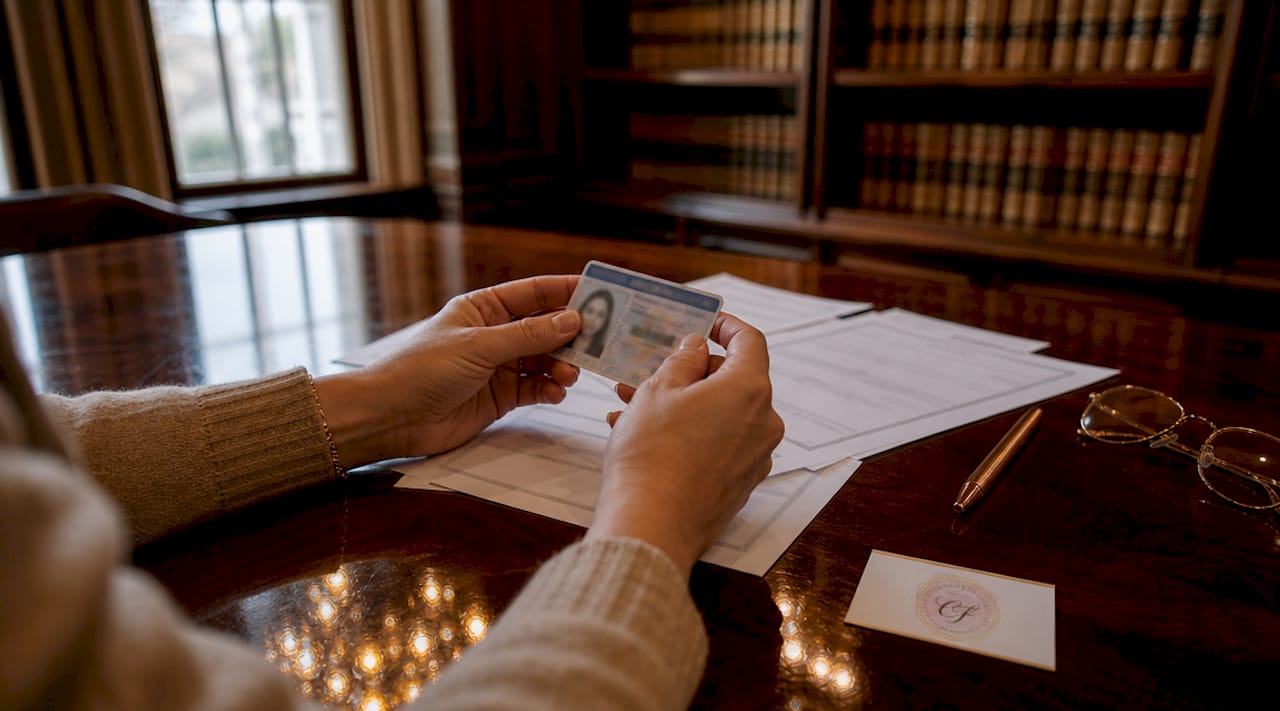
Accepted forms of government-issued photo ID
Your ID is the foundation of the entire notarization. Identification procedures form the core of fraud prevention and preserve the legal credibility of the notarized document. Accepted forms typically include:
- A current, unexpired U.S. passport or passport card
- A state-issued driver's license or non-driver ID
- A U.S. military ID or federal government employee ID
- A permanent resident card (green card)
- A foreign passport, in some states
The name on your ID must match the name on the document exactly. A maiden name on an old license paired with a married name on a deed will stop the appointment cold. Maryland law treats ID verification as a non-negotiable step to reduce notary liability and prevent invalid notarizations. That standard applies broadly across most states.
Some states permit a credible witness to substitute for a government ID when the signer cannot produce one. Pennsylvania notary guidelines, for example, allow personal knowledge or a credible witness as an alternative, but the criteria are strict. Verify your state's rules with your notary before the appointment to avoid a last-minute reschedule.
Pro Tip: Before the appointment, lay your ID next to the signature line of your document and confirm the names match character for character, including middle names and suffixes like Jr. or III.
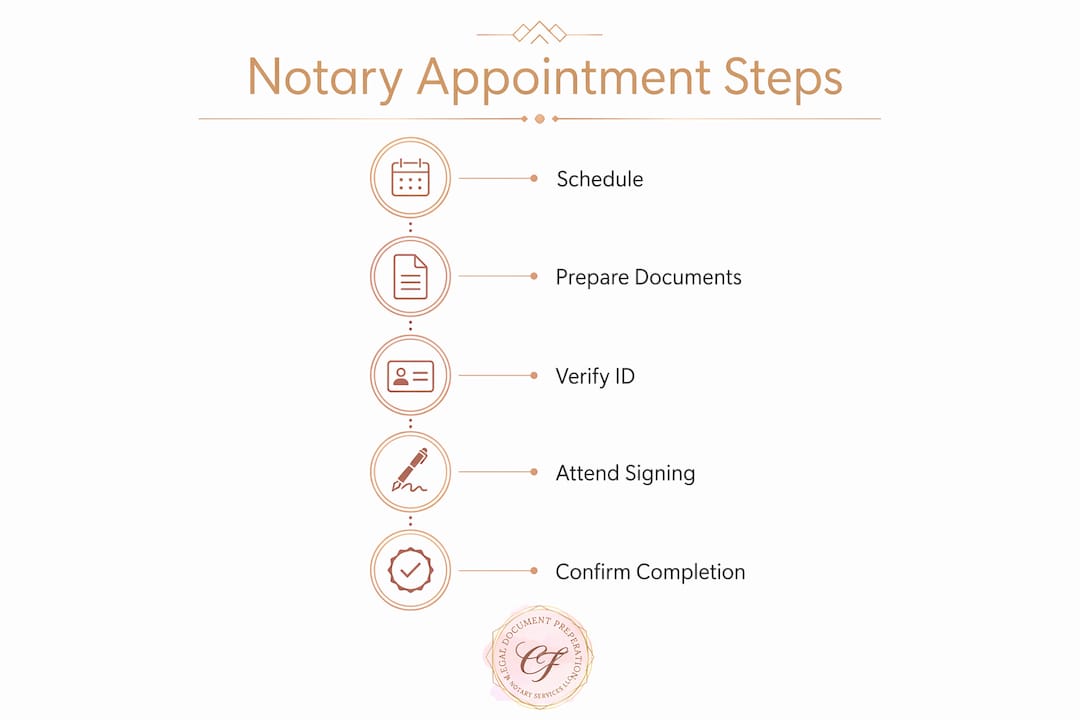
How to schedule and prepare for your mobile notary appointment effectively
Scheduling a mobile notary visit is not just about picking a time. The appointment only works when every required party is present and the location supports a clean, witnessed signing. Follow these steps to set up a smooth visit:
- Confirm all signers and witnesses are available. Every person whose signature requires notarization must be physically present. If a document requires two witnesses, both must attend with valid IDs.
- Choose a quiet, well-lit location with a stable writing surface. A kitchen table, conference room, or home office works well. Avoid cars or crowded public spaces where distractions can cause signing errors.
- Clarify fees and payment methods in advance. Travel fees for mobile notaries are often unregulated and can range from $50 to $150 depending on distance and time. Ask specifically whether the quoted price is all-inclusive or whether per-signature fees apply on top.
- Verify the notary's credentials before booking. In Florida, notaries are commissioned through the Florida Department of State. You can confirm a notary's active status through the state's online database before the appointment.
- Communicate any special instructions ahead of time. If your document is in Spanish, if a signer has a disability, or if you need a bilingual notary, say so when scheduling. Cflegalformhelp, for instance, offers bilingual English and Spanish notary services in South Florida, which eliminates confusion during the signing itself.
Pro Tip: Write down two or three questions for your notary before the appointment, such as whether your document type requires a jurat or an acknowledgment. Asking in advance prevents surprises at the table.
Step-by-step checklist to prepare for the mobile notary visit
Use this checklist in the 24 hours before your appointment. It covers the most common failure points in order of priority.
- Review every page of your document and fill in all required fields except the signature line (for jurats, you must sign in front of the notary).
- Do not pre-sign any document that requires the notary to witness your signature. Pre-signing is one of the leading causes of appointment failure and forces a full restart.
- Gather all related pages, attachments, and exhibits. A power of attorney with a missing exhibit page is incomplete and cannot be notarized.
- Confirm that required witnesses have valid, unexpired photo IDs. Learn more about witnessing requirements if your document type involves a signature witnessing act.
- Have your payment ready in the agreed form, whether cash, Zelle, or card, before the notary arrives.
- Set aside 15 minutes before the appointment to re-read the document so you can sign confidently without hesitation.
What to expect during the signing itself
The notary will ask to see your ID, confirm your identity, and watch you sign. For a jurat, you will also take an oath or affirmation. The notary then completes the certificate, applies their seal, and signs. The entire process for a single document typically takes 10 to 20 minutes when you arrive prepared.
| Step | Who acts | What is required |
|---|---|---|
| Identity verification | Notary checks signer's ID | Current, unexpired government-issued photo ID |
| Document review | Notary reviews completeness | All fields filled, no blank mandatory sections |
| Signing | Signer signs in notary's presence | Original document, correct name match |
| Certificate completion | Notary completes and seals | Contemporaneous completion, no pre-stamping |
Common mistakes to avoid at your mobile notary appointment
Most appointment failures come down to a short list of preventable errors. Knowing them in advance is the fastest way to protect your time and your documents.
- Expired or mismatched ID. An ID expired even one day before the appointment is unacceptable. A name discrepancy between your ID and your document is equally disqualifying.
- Pre-signing documents. Signing documents prematurely or submitting incomplete packets causes most appointment failures. Many notaries will halt the process rather than improvise.
- Missing pages or attachments. A notarized document with a missing exhibit is legally incomplete. Staple or clip all pages together before the notary arrives.
- Absent witnesses or co-signers. If a second signer is stuck in traffic, the notary cannot proceed. Confirm attendance the morning of the appointment.
- Unclear fee arrangements. Showing up without cash when the notary only accepts cash, or vice versa, wastes everyone's time. Settle payment logistics at booking.
Contacting your notary 24 hours before the appointment to confirm logistics, document type, and witness attendance is the single most effective step you can take to prevent a reschedule.
State laws vary on whether a credible witness can substitute for a missing ID. Verifying that eligibility before the appointment, rather than at the door, avoids the most frustrating kind of last-minute cancellation.
How to verify the type of notarization required and why it matters
The type of notarization determines whether you can sign before the notary arrives, whether you need to take an oath, and what the certificate must say. Getting this wrong produces a document that looks notarized but fails legally. Notaries cannot give legal advice on document type or completion, so you must clarify the requirement with the issuing authority or an attorney before the appointment.
| Notarial act | When you sign | Oath required | Common documents |
|---|---|---|---|
| Acknowledgment | Before or during appointment | No | Deeds, powers of attorney |
| Jurat | In notary's presence only | Yes | Affidavits, sworn statements |
| Oath or affirmation | During appointment | Yes | Court documents, oaths of office |
| Copy certification | N/A | No | Passports, diplomas, licenses |
Pre-signing or pre-stamping blank certificates is prohibited and a recognized violation that can trigger disciplinary action against the notary. The certificate must be completed at the moment of the notarization act and physically attached to the document. This is why you should never ask a notary to "just stamp it" after the fact.
Remote Online Notarization, or RON, is a separate category. RON platforms require approved audio-video technology, credential analysis, and identity proofing, with recordings retained for 10 years. If your document allows RON, your preparation steps shift to technology setup rather than physical document gathering. For a deeper look at how mobile notary services work in Florida specifically, including RON eligibility, that resource covers the full process.
Key takeaways
Successful mobile notary appointment preparation requires complete documents, a current matching ID, confirmed witnesses, and clarity on the notarial act type before the notary arrives.
| Point | Details |
|---|---|
| ID must match the document | Bring a current, unexpired government-issued photo ID with a name that matches the document exactly. |
| Never pre-sign jurats | Sign only in the notary's presence for jurats; pre-signing invalidates the notarization and forces a restart. |
| Confirm fees before booking | Mobile travel fees range from $50 to $150 and are often unregulated; clarify all costs at scheduling. |
| Know your notarial act type | Acknowledgments, jurats, and copy certifications each have different signing rules; verify with the issuing authority. |
| Coordinate all parties in advance | Every signer and witness must be present with valid ID; confirm attendance the morning of the appointment. |
What I've learned from years of watching appointments go sideways
The mistake I see most often is not a missing document. It is a document that looks complete but was signed before the notary arrived. The signer did everything right except that one step, and now the whole appointment has to be rescheduled. It happens because people assume signing early saves time. It does the opposite.
The second pattern I notice is clients who do not know what type of notarization their document requires. They show up with an affidavit expecting a quick stamp, not realizing they need to take an oath. That five-second misunderstanding can create real confusion at the table, especially when the document was prepared by a third party who did not explain the process.
My honest advice: call or message your notary the day before. Confirm the document type, ask whether you need witnesses, and settle the payment method. That one conversation eliminates 80% of the friction I see in appointments. Preparation is not about being overly cautious. It is about respecting your own time and the legal weight of what you are signing. A notarized document carries your identity and your intent. Treat the preparation with the same seriousness you would give the document itself.
— Cristina
Ready for a smooth notarization? Cflegalformhelp can help
Cflegalformhelp provides professional mobile notary services throughout South Florida, including Naples and the surrounding areas. Whether you need a deed, power of attorney, affidavit, or loan package notarized, the team handles scheduling, document review, and bilingual support in English and Spanish so nothing falls through the cracks. Flat-fee pricing means you know the full cost before the notary arrives, with no surprise travel charges. If you also need help preparing the underlying document, Cflegalformhelp offers legal document preparation services that ensure your paperwork is complete and ready to notarize before the appointment is even booked.
FAQ
What ID do I need for a mobile notary appointment?
Bring a current, unexpired government-issued photo ID such as a driver's license, U.S. passport, military ID, or permanent resident card. The name on your ID must match the name on the document being notarized.
Can I sign my document before the notary arrives?
For acknowledgments, you may sign in advance, but for jurats, you must sign in the notary's presence after taking an oath. Pre-signing a jurat invalidates the notarization and requires starting over.
How much does a mobile notary appointment cost?
Mobile notary fees vary by state and distance. Travel fees are often unregulated and typically range from $50 to $150 total, so confirm all charges, including per-signature fees, when you book.
What happens if I don't have a valid ID?
Some states allow a credible witness to verify your identity in place of a government ID, but the criteria are strict and state-specific. Contact your notary before the appointment to determine whether this option applies in your state.
Do I need witnesses at my mobile notary appointment?
Some documents, such as wills and certain deeds, require one or two witnesses in addition to the notary. Witnesses must be present with valid photo IDs. Confirm witness requirements with the document issuer or your notary before scheduling.