
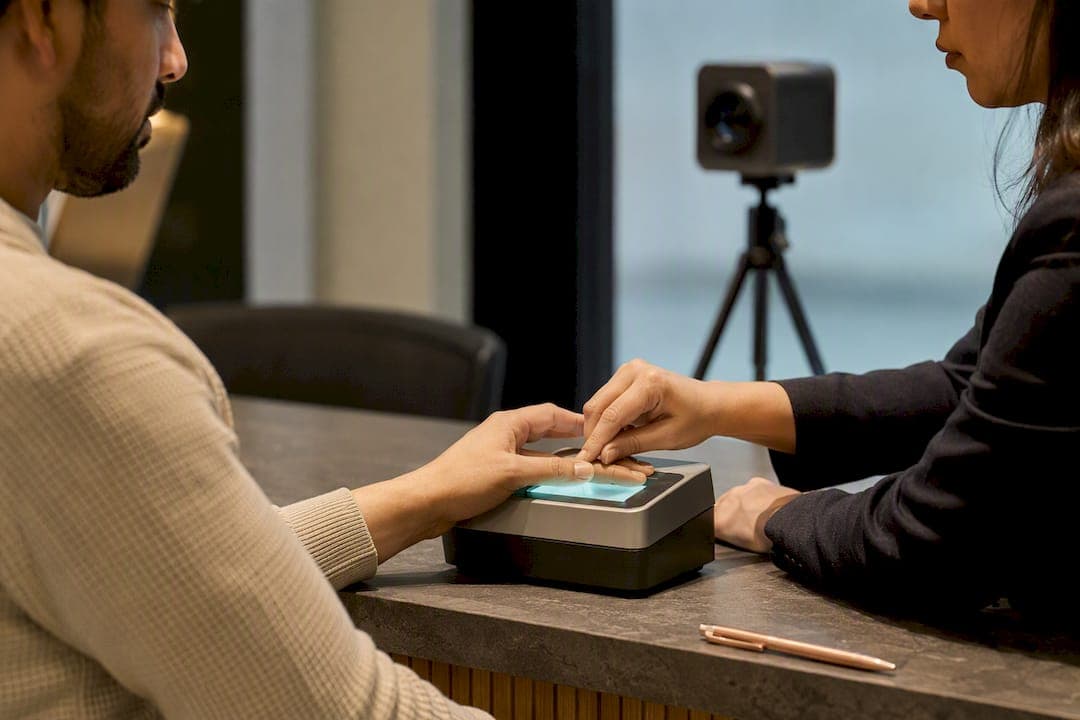
A USCIS biometrics appointment is a routine visit to an Application Support Center where a technician collects your fingerprints, a photograph, and a digital signature. The single most important thing to do is bring your Form I-797C appointment notice and a valid, unexpired photo ID. Beyond that, the visit is short, procedural, and nothing to lose sleep over.
TL;DR:
- Most biometrics appointments take 15 to 30 minutes and only involve fingerprinting, photo capture, and digital signatures, with no interview or case review.
- Applicants must bring their appointment notice, a valid photo ID, and any relevant documents, especially if there are name discrepancies or prior case references.
- Missing an appointment without rescheduling in advance can lead to case abandonment, and USCIS considers circumstances like illness or emergencies as good cause for late rescheduling.
- Elderly applicants or those with disabilities can request accommodations, including mobile biometrics, but must coordinate with USCIS beforehand.
- If fingerprints are unclassifiable due to skin issues or damage, USCIS may waive recaptures; prior biometrics may be reused if recent enough, but typically, fresh data is needed.
Table of Contents
- What a Biometrics Appointment Is and Why USCIS Collects It
- Your Appointment Notice, Timing, and Where It Happens
- What Happens During the Appointment, Step by Step
- What to Bring: Your Document Checklist
- Rescheduling, Missed Appointments, and What Counts as "Good Cause"
- Special Situations: Age, Disability, and Mobile Biometrics
- After Biometrics: What Happens to Your Data Next
- Practical Preparation Tips That Actually Help
- A Practitioner's View on Getting This Right the First Time
- One More Thing Before Your Appointment
- Sources
What a Biometrics Appointment Is and Why USCIS Collects It
USCIS collects fingerprints, a photograph, and a digital signature at every Application Support Center (ASC) visit. Each piece serves a specific function: your fingerprints confirm your identity and get checked against FBI criminal history records, your photo goes on secure documents like your green card or Employment Authorization Document, and your signature authenticates your application file.
USCIS has the authority to require biometrics under its own Policy Manual, which lays out the collection process and the standards officers use when an applicant's fingerprints or documentation raise questions. You will typically get a biometrics notice after filing forms like the I-485 (adjustment of status), I-765 (work authorization), I-131 (travel document), N-400 (naturalization), or certain family petitions that require identity verification.
Here's a point that trips up a lot of applicants: this is not an interview. Nobody at the ASC asks about your case history, your marriage, or your job. Technicians are trained to collect data, not to adjudicate anything. If you're nervous because you think an officer is going to grill you about your application, you can relax. The person handling your fingerprints has no say in whether your case gets approved. That decision happens later, usually in a different office entirely, based on your full file.
Your Appointment Notice, Timing, and Where It Happens
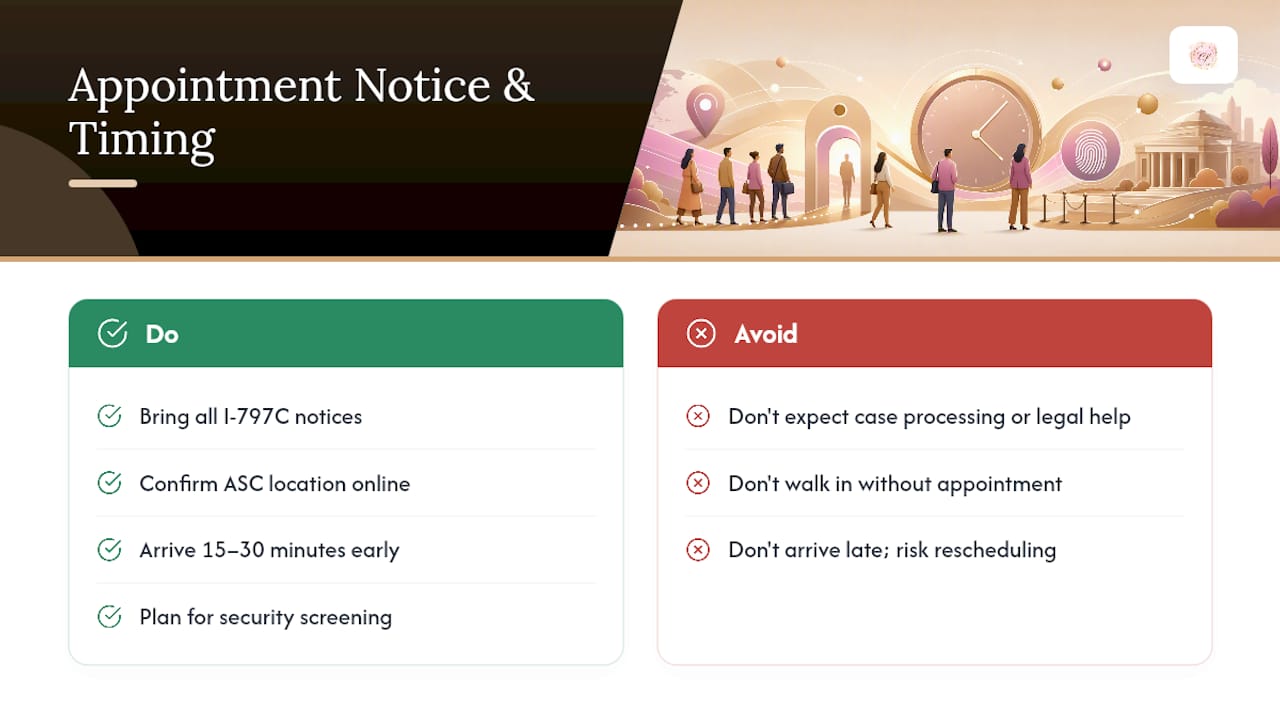
Your Form I-797C appointment notice contains everything you need: the date, the time, the exact ASC address, and a unique barcode the front desk scans when you check in. If USCIS has sent you more than one notice for the same case (which sometimes happens when a form gets reassigned to a different center), bring all of them, not just the most recent.
Timing varies by service center and caseload, but most applicants receive their notice within a few weeks to a couple of months after filing. There's no fixed rule, and delays happen, particularly during high filing volume periods. If you haven't received a notice within what feels like a reasonable window for your form type, checking your case status online is a smarter move than assuming something went wrong.
You can confirm your assigned ASC location using the USCIS Application Support Centers locator, which also lists center hours and, importantly, does not accept walk-ins. ASCs exist solely to collect biometrics. They don't process filings, answer case questions, or provide legal advice, so don't show up expecting anything beyond fingerprints and a photo.
Plan to arrive 15 to 30 minutes before your scheduled time. ASC lobbies run security screening similar to a courthouse: metal detectors, bag checks, and sometimes a wait if the center is busy that day. Arriving late can mean getting turned away and having to reschedule, which adds weeks back onto your timeline.
What Happens During the Appointment, Step by Step
The actual visit moves faster than most people expect. Here's the typical sequence:
- Check-in and intake. Staff scan the barcode on your I-797C, verify your photo ID against your file, and confirm your name and date of birth match your paperwork.
- Fingerprint scanning. A technician uses a digital scanner (not ink) to capture all ten fingerprints, sometimes rolling each finger individually for a clean image.
- Photograph. You'll stand against a plain background for a passport-style photo taken on-site.
- Digital signature. You sign electronically on a small pad, which gets attached to your biometric record.
Most appointments take 15 to 30 minutes from check-in to walkout, according to practitioner guides like LegalClarity's ASC overview. Longer waits usually come from lobby congestion, not the actual data collection, which takes just a few minutes once you're called.
Occasionally, a scanner can't get a clean read on someone's prints, often due to scarring, dry skin, or worn ridges from manual labor. When that happens, the technician will usually attempt a recapture on the spot, trying different pressure or additional passes. If the prints remain unclassifiable after repeated attempts, USCIS may proceed with a fingerprint waiver noted in your file rather than requiring you to return. It's an inconvenience, not a dead end.
What to Bring: Your Document Checklist
Showing up without the right paperwork is one of the most common (and most avoidable) reasons applicants get sent home and have to start the rescheduling process over. Bring the following:
- Your original Form I-797C appointment notice (not a photocopy, if possible)
- A valid, unexpired government-issued photo ID: a passport, permanent resident card, state driver's license, or state ID card
- Any prior USCIS correspondence relevant to your case, especially if you've had a name change or amended petition
- Certified translations for any foreign-language documents you need to present
- A second notice if USCIS issued more than one for the same filing
If your legal name on your ID doesn't match the name on your appointment notice, don't assume that's a minor detail. Bring supporting documents like a marriage certificate, a court-ordered name change, or a certified translation if the discrepancy involves a foreign document. Flagging the mismatch yourself at check-in, rather than letting staff discover it, tends to smooth things over faster.
If you're not fluent in English, you're allowed to bring a translator, an attorney, or an accredited representative to assist you at check-in. This isn't required for most straightforward appointments, but it can prevent confusion if your case involves a complicated document history.
Rescheduling, Missed Appointments, and What Counts as "Good Cause"
If you can't make your scheduled time, you have two paths. For routine rescheduling, log into your myUSCIS online account and request a new date. USCIS requires that online reschedule requests be submitted sufficiently in advance before your appointment time. If your situation is urgent or you missed that window, call the USCIS Contact Center directly and explain the circumstances.
The USCIS Policy Manual outlines a "good cause" standard for late or unusual reschedule requests. Good cause generally covers situations like sudden illness or hospitalization, prior nonrefundable travel booked before the notice arrived, transportation breakdowns, urgent caregiving responsibilities, or a notice that arrived too close to the appointment date to act on in time. USCIS also issued a specific policy update on ASC reschedule requests that clarifies how officers weigh untimely requests, giving more structure to what used to be a case-by-case judgment call.
Here's the part that deserves real attention: if you miss your appointment without rescheduling in advance, or your untimely request doesn't meet the good cause bar, USCIS may treat your underlying application as abandoned. That's not a warning, that's the actual regulatory framework, tied to rules like 8 CFR 103.2 on benefit request adjudication. Abandonment can mean your case gets denied outright, forcing you to refile and pay fees again.
USCIS does retain discretion here. A well-documented, reasonable explanation submitted promptly after a missed appointment sometimes gets a second look. But discretion isn't a guarantee, and betting your case on it is a risk you can usually avoid just by rescheduling online the moment you know you can't make it.
Special Situations: Age, Disability, and Mobile Biometrics
Applicants age 14 and older are generally required to sign their biometric record themselves; younger children typically have exemptions built into the process, and very young applicants may not need fingerprints collected at all depending on the form. If your child's case involves biometrics, the notice itself will usually specify what's expected.
If you have a disability or medical condition that makes visiting an ASC difficult, or you're homebound, USCIS does provide accommodation options, including mobile biometric visits in limited circumstances. The official biometrics guidance page recommends contacting USCIS as early as possible to request this, since accommodations require advance coordination rather than a same-day fix.
Language assistance is available if you need it, and bringing your own interpreter is also allowed. One thing worth saying plainly: ASC visits are strictly for biometric collection. They are not enforcement checkpoints, and showing up for a scheduled appointment is a routine administrative step, not something that should trigger fear about your case being singled out.
After Biometrics: What Happens to Your Data Next
Your fingerprints get routed to the FBI for an identity history summary check, which comes back as one of three results: no record, a record found, or unclassifiable (meaning the prints weren't clear enough to search reliably). An unclassifiable result doesn't automatically stall your case, but it may prompt USCIS to request a second appointment.
If you've had biometrics taken for USCIS before, you might not need new ones. USCIS can reuse a photograph if it's less than 36 months old for certain filings, though some forms, including the I-485 and N-400, generally require fresh biometrics regardless of prior submissions. Check your specific form instructions rather than assuming reuse applies to your case.
Completed biometrics become part of your full file, which the adjudicating officer reviews alongside everything else you submitted. You can track your case status online using your receipt number, and a status change following your ASC visit is often the first visible sign your case is moving forward.
Practical Preparation Tips That Actually Help
Pro Tip: If your job involves heavy manual labor, avoid it for a few days before your appointment and apply a light, non-greasy lotion daily leading up to the visit. Worn or dry ridges scan poorly, and a little prep can save you a second trip.
Skip the lotion on the actual day of your appointment. Anything too fresh or oily on your fingertips right before scanning can smear the print rather than help it.
For your photo, remove glasses unless you have a documented religious exception, and wear plain, neutral clothing without heavy patterns. Practice your signature beforehand if you're not used to signing on a digital pad. It sounds small, but a shaky signature can sometimes require a redo.
Give yourself buffer time getting to the ASC, and check the USCIS office closings page the morning of your visit. If a center closes unexpectedly due to weather or an emergency, USCIS automatically reschedules affected appointments, so you don't need to call and request a new date yourself in that scenario.
A Practitioner's View on Getting This Right the First Time
In practice, the same handful of mistakes show up again and again: a name that doesn't match between an ID and an appointment notice, a missing translation for a foreign document, or a client unsure which receipt number belongs to which filing. Confirming name spelling, gathering certified translations in advance, and double checking the receipt number against the correct notice before appointment day resolves most of these before they become a problem.
Bilingual support matters here more than people expect, since a lot of confusion at check-in traces back to a document that was never fully understood by the person carrying it. For readers who want that kind of review done before their appointment, document preparation and certified translation services can catch mismatches early rather than at the ASC counter.
One More Thing Before Your Appointment
Cristina Fernandez is a certified legal document preparer and immigration paralegal who has guided clients through this exact process more times than she can count. Her advice boils down to this: read your notice carefully, bring your ID, and if anything about your paperwork feels uncertain, ask an accredited preparer before appointment day, not after.
— Cristina