
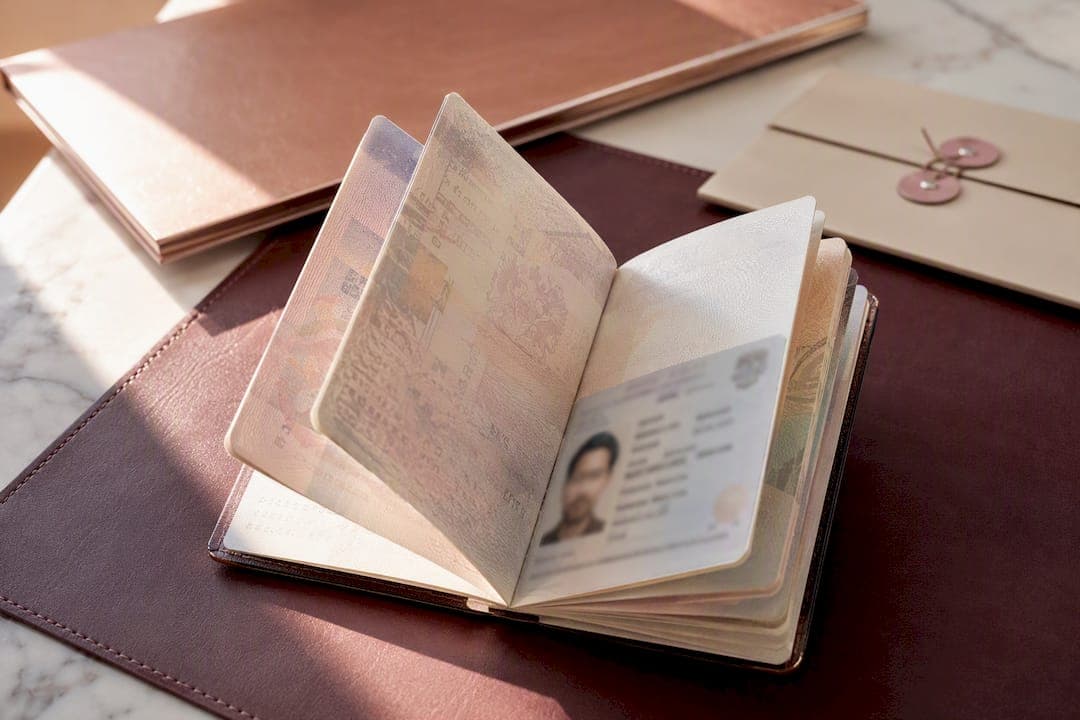
You need an English translation whenever a passport page you submit to USCIS contains non-English text the officer must read to decide your case. That translation must come with a signed certification under 8 CFR 103.2(b)(3). Notarization is generally not required. If the page is already in English, or you aren't submitting it at all, you can usually skip translation altogether.
TL;DR:
- Only submit translations for passport pages containing biographical details, visas, entry stamps, or government annotations that impact your case.
- The translation must include a signed certification covering the translator's name, competency, accuracy, and date; notarization is generally unnecessary.
- Incomplete translations, missing signatures, blurry scans, or self-made translations can cause Requests for Evidence that delay your application.
- Focus your translation efforts on the pages that matter most; translating unnecessary pages wastes time and money.
- Keeping the translator’s contact information readily available can facilitate quick clarification if USCIS questions the translation's accuracy.
Table of Contents
- Why passport translation is required uscis for most filings
- Which passport pages to translate
- What USCIS requires from a certified translation
- Common mistakes that trigger a Request for Evidence
- How to prepare and submit your passport translation
- Why this guidance holds up
- What most applicants get backward about passport translation
- How Cflegalformhelp handles your passport translation
- Sources
Why passport translation is required uscis for most filings
USCIS reviewers can't verify what they can't read. That's the entire logic behind 8 CFR 103.2(b)(3): any foreign-language document submitted with a benefit request needs a complete English translation, backed by the translator's signed certification. Passport pages fall squarely into that rule because officers rely on them to confirm identity, entry dates, prior visa history, and any government annotations that affect eligibility.
This shows up constantly across common filings. Form I-485 checklists list travel documents among the items applicants often submit as identity or admission evidence. Petitioners filing Form I-129 frequently attach passport and Form I-94 pages to prove a beneficiary's travel history. N-400 naturalization applicants and asylum seekers face the same standard whenever a passport page carries facts the case depends on.
USCIS uses these pages for a few specific purposes:
- Confirming legal identity and matching it against other forms in the packet
- Verifying admission dates, visa classifications, and port-of-entry stamps
- Checking for name changes, marriage annotations, or government endorsements
- Cross-referencing prior travel against claimed dates of entry or absence
Translation becomes unnecessary in narrower situations: when a page is entirely blank, when it's already printed in English, or when you simply aren't including that page in your filing. A passport's inside cover with no writing on it doesn't need a translator's attention.
Which passport pages to translate
Not every page carries the same weight, and treating them all identically wastes money and slows down your own preparation. Here's how to sort them:
- Biographic page. Translate it if any required field, name, date of birth, place of birth, issuing authority, appears only in a foreign language or in a non-Latin script (Arabic, Cyrillic, Chinese characters) that could create a mismatch against your other forms.
- Visa and entry/exit stamp pages. Translate any stamp, sticker, or handwritten note you're relying on to prove a date of entry, visa category, or duration of stay.
- Endorsement and annotation pages. Government notes about extensions, corrections, or restrictions need translation if they support a claim in your case.
- Blank or ICAO-standard bilingual pages. These usually don't need translation. Machine-readable passports formatted to International Civil Aviation Organization standards often already display key fields in English alongside the issuing country's language.
When you're not sure whether a stamp matters, translate the pages you're actually submitting rather than guessing which details an officer will need. It costs less than a Request for Evidence.
What USCIS requires from a certified translation
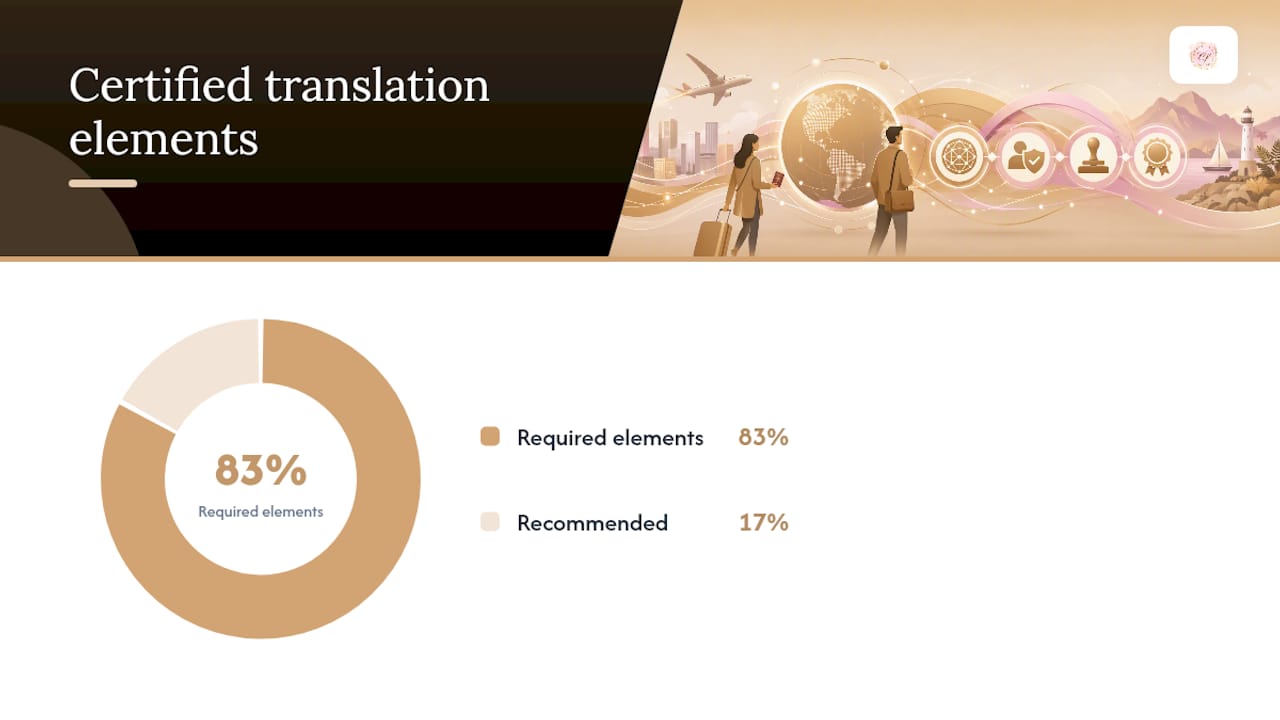
The regulatory bar is narrower than most applicants expect. 8 CFR 103.2(b)(3) requires a full English translation plus the translator's signed statement certifying that the translation is complete and accurate, and that the translator is competent to translate from the source language into English.
A compliant certification statement should include:
- The translator's full name
- A statement that the translation is complete and accurate
- A statement of the translator's competence in both languages
- The translator's signature
- The date of certification
- Contact information for the translator (strongly recommended, not strictly mandatory)
Notarization is not the same thing as certification, and USCIS generally doesn't require it. A notary confirms the identity of the person signing a document, not the quality of the translation itself, according to guidance on Canada's official immigration site explaining the same distinction. USCIS accepts a signed certification from any competent translator; no professional license or American Translators Association membership is required. Other agencies, like the Social Security Administration, sometimes set higher translator-qualification bars, so don't assume USCIS rules apply everywhere. If a foreign consulate or a different U.S. agency later asks for a notarized version, a partner guide on apostilles versus notarization explains when that extra step actually matters.
Common mistakes that trigger a Request for Evidence
Most translation problems that delay a case aren't complicated; they're careless. The USCIS Policy Manual is direct about this: inadequate translations lead to Requests for Evidence and additional verification steps, adding months to a timeline that was already tight.
The recurring culprits:
- Partial translations that skip stamps, marginalia, or annotations the applicant assumed didn't matter
- Certification statements missing a signature, the translator's name, or the required competence statement
- Self-translations or a family member's translation, which invites closer scrutiny because the translator has an obvious stake in the outcome
- Blurry scans or files where the translation isn't clearly paired with its source page
- Spelling inconsistencies for names and dates across the passport, the translation, and the rest of the filing packet
Pro Tip: Keep your translator's contact information on file even after you submit your case. If USCIS has a question about accuracy, being able to reach the person who signed the certification can resolve it in days instead of triggering a formal RFE.
How to prepare and submit your passport translation
A methodical approach here saves weeks of waiting later.
- Identify the pages that matter. Start with the biographic page, then flag any visa stamp or annotation your case depends on.
- Get a signed Certificate of Accuracy. Confirm it includes every required element: translator name, accuracy statement, competence statement, signature, and date.
- Scan everything clearly. Attach each translation directly behind its corresponding original page, labeled consistently, so the reviewer never has to hunt for a match.
- Keep the originals and the translator's contact details. If USCIS follows up to verify the translation, you'll want to respond fast.
| Step | What it prevents |
|---|---|
| Translate only pages you submit | Wasted cost, unnecessary paperwork |
| Full certification statement | Missing-element RFEs |
| Clear scans, paired filing order | Mismatch and legibility RFEs |
| Retain translator contact info | Slow response to verification requests |
Why this guidance holds up
This guidance comes from Cristina Fernandez, a certified legal document preparer and immigration paralegal who founded Cflegalformhelp to help applicants handle exactly this kind of paperwork without hiring an attorney. The firm works bilingually in English and Spanish and has prepared translation and immigration filings across a wide range of case types, drawing on resources like its certified translation guide for applicants who want to see compliant certification language firsthand.
Even with clear rules, form-specific instructions shift from filing to filing. Always check the current USCIS filing guidance for your exact form, and consult a qualified preparer if your case involves multiple name changes, unusual travel history, or documents in a script that's easy to mistranslate.
What most applicants get backward about passport translation
Most guidance on this topic treats translation as a formality, something to knock out quickly so the "real" application can move forward. That gets the priority exactly wrong. In years of preparing immigration paperwork, the translation and certification page is where I've seen more avoidable RFEs originate than almost anywhere else in a filing packet.

The conventional advice tells people to "translate your passport." It rarely tells them which pages actually matter, or that a missing competence statement is just as fatal to a filing as no translation at all. I'd rather see applicants spend fifteen extra minutes matching names and dates across every document in their packet than rush through a translation that technically exists but doesn't hold up under review.
If you take one thing from this guide, prioritize the certification statement over the translation itself. A technically imperfect translation with a complete, signed certification rarely causes problems. A beautiful translation missing that signature will sit in an RFE queue regardless.
— Cristina
How Cflegalformhelp handles your passport translation
Cflegalformhelp prepares certified translations built to satisfy 8 CFR 103.2(b)(3) requirements from the start, so you're not left guessing whether your certification statement covers everything USCIS expects.
The firm's certified translation services include a complete Certificate of Accuracy with every required element: translator identity, competence statement, signature, and date. Because Cflegalformhelp also handles immigration form preparation directly, your translated passport pages get attached in the correct order alongside the rest of your evidence, reducing the chance of a mismatch-triggered RFE. Pricing is flat-fee, service is bilingual in English and Spanish, and turnaround is built for filing deadlines rather than open-ended timelines. If you'd rather have a certified translation prepared correctly the first time than risk a delay months into your case, reach out through the immigration forms help page to get started.
Sources
- 8 CFR 103.2 — Submission and Adjudication of Benefit Requests
- Checklist of required initial evidence for Form I-485 - USCIS