

Your immigration case status is a milestone indicator from USCIS, not a real-time feed. It signals where your application stands in the process and, critically, whether you need to act. Missing a status update can mean missing a deadline. Missing a deadline can mean a denied case.
Some status changes require immediate action. The most urgent is a Request for Evidence (RFE), which triggers a hard 87-day deadline to respond fully. Miss it, and USCIS typically treats your case as abandoned and denies it automatically. That is why immigration case status matters far beyond simple curiosity.
Key reasons to monitor your case status consistently:
- Status updates mark specific processing milestones, not every internal step
- Some updates, like an RFE or biometrics notice, demand a response by a fixed date
- Long periods of silence are normal and do not always signal a problem
- Missing mailed notices due to an outdated address can cause procedural denials
- Monitoring helps you distinguish a normal delay from a case that is genuinely stalled
How to check your immigration case status online
The official tool for checking your status is the Case Status Online portal at egov.uscis.gov. You will need your 13-character receipt number, which consists of three letters followed by 10 digits. Do not include dashes when entering it.
Practical steps for checking effectively:
- Locate your receipt number on the I-797 Notice of Action mailed after USCIS receives your filing
- Compare your receipt date to the published processing times for your specific form and service center
- Begin checking actively only when your receipt date approaches the posted processing window
- Keep all physical notices and mailed correspondence in a safe, organized place
- If you applied for a visa rather than a USCIS benefit, check status through the State Department's portal instead
Pro Tip: If the main USCIS portal is slow or unavailable, try egov.uscis.gov/casestatus directly. The case status landing page sometimes loads when the broader site is under maintenance.
Checking your status daily adds anxiety without adding information. USCIS updates case status at processing milestones, not on a schedule. Focus on organizing your documents and monitoring your receipt date against published timelines instead.

What USCIS processing times actually tell you
USCIS processing times are historical averages, not guaranteed deadlines. They reflect how long it took to complete a certain percentage of cases for a given form and office, and they shift regularly based on application volume and staffing.
What this means in practice:
- Your case may take longer than the posted range without anything being wrong
- Long silent periods are common during background checks, batch processing, and queue backlogs
- USCIS processes millions of cases; internal steps rarely generate a public status update
- Status updates are event-driven, not time-driven. Silence usually means normal internal progress
- You can submit a formal case inquiry only after your receipt date falls outside the published processing time range for your form and office
One concrete example of a system-wide delay: on April 27, 2026, USCIS launched an enhanced fingerprint re-vetting process tied to an FBI database expansion. Millions of cases appeared frozen or showed unavailable status messages for months. Applicants were not required to act, but those who did not understand why their case looked stuck often panicked unnecessarily.
What common USCIS case status messages mean
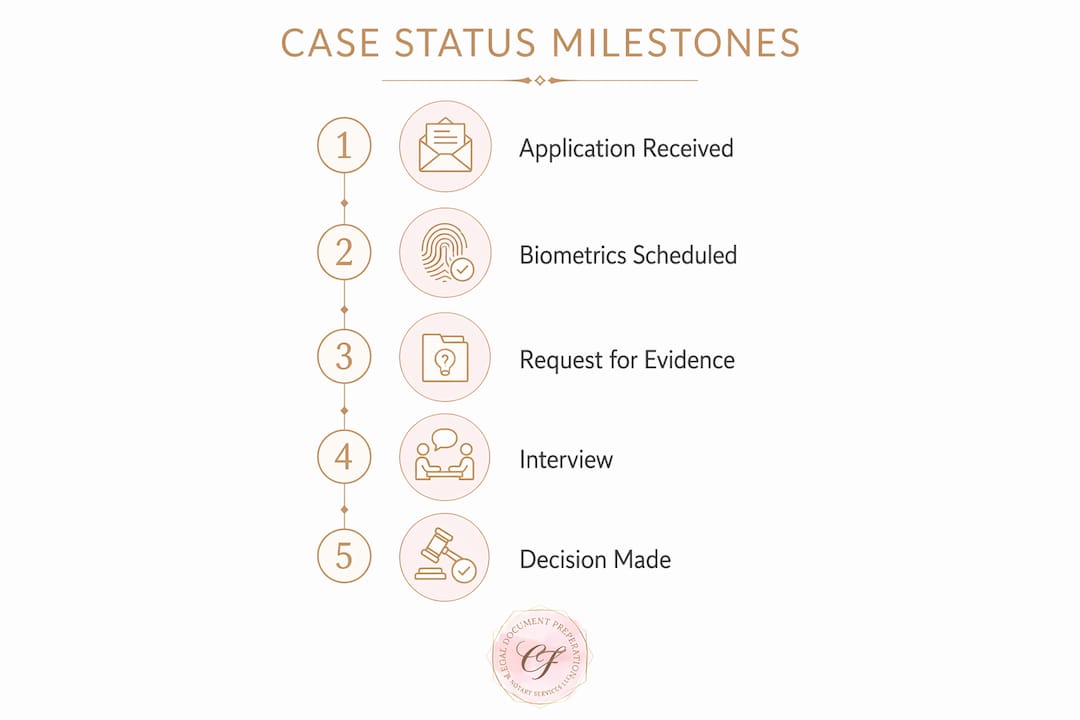
Each status message carries a specific meaning and, in some cases, a required response. Knowing what each one signals keeps you from either overreacting or missing something urgent.
Common USCIS status messages and what they mean:
- Case Was Received: USCIS confirmed your filing. No action needed. Wait for the next update.
- Request for Evidence Was Sent: A strict 87-day response deadline begins from the date on the RFE notice. Respond fully and on time.
- Case Is Being Actively Reviewed: An officer is working on your file. No immediate outcome is guaranteed, and no action is needed from you.
- Response to Request for Evidence Was Received: USCIS confirmed receipt of your RFE reply and is processing it.
- Case Was Approved: Your petition or application was granted. Additional steps, such as visa issuance or card production, may still follow.
- Case Was Denied: You have the right to appeal or file a motion, but both options carry strict deadlines. Act quickly and consult a professional.
- Case Status Unavailable or No Updates: This often reflects internal review stages, system maintenance, or the kind of re-vetting pause that began in April 2026, not a rejection.
About 60–70% of well-prepared RFE responses result in approval, underscoring the importance of a thorough reply. That figure underscores how much the quality and completeness of your reply matters.
Pro Tip: Respond to an RFE as early as possible, not on day 85. Late or partial responses lead to denial. Gather all requested evidence before submitting, and send everything together in one complete package.
When to seek help and how to respond to USCIS requests
Knowing when to act, and when to wait, is one of the most practical skills in managing your case. Not every delay requires a call to USCIS, and not every status message requires a response.
Situations that require immediate action:
- An RFE notice arrives: respond fully within the 87-day window
- A biometrics appointment notice arrives: attend on the scheduled date or reschedule promptly
- An interview notice arrives: prepare and appear as directed
- Your address changes: update it with USCIS right away to avoid missing mailed notices
Situations where waiting is the right move:
- Your receipt date has not yet reached the posted processing time range
- Your status shows no updates but no deadline-driven notice has been mailed
- The USCIS website shows a system-wide delay or maintenance message
Repeated calls to the USCIS Contact Center do not speed up processing. Submit a formal online inquiry only after your case exceeds the published processing window. For cases that appear genuinely stuck beyond normal ranges, or for complex situations involving appeals or motions, professional guidance from an immigration paralegal or attorney is worth pursuing. Understanding immigration law basics can also help you frame the right questions before you seek help.
Pro Tip: Keep a dedicated folder, physical or digital, for every piece of USCIS correspondence. When you submit an RFE response, note the date, the tracking number, and what you included. That record protects you if USCIS claims it did not receive your reply.
Expert guidance on managing your immigration case status
Immigration professionals consistently make one point: the case status tracker is a milestone tool, not a progress bar. Silence between milestones is normal and expected. The risk is not in the silence. It is in missing the moments when USCIS does reach out.
Centralized tracking reduces that risk. When you keep all notices, receipt numbers, and correspondence in one place, you are less likely to miss a deadline or overlook a data error on a USCIS notice. Organized case tracking benefits both self-represented applicants and those working with attorneys, because errors like a misspelled name or wrong receipt number can cause delays that are entirely avoidable.

Experts also caution against filing inquiries before processing times expire. Premature or repeated inquiries do not move your case forward and can tie up resources that USCIS needs for actual case work. The better use of that time is preparing thorough documentation so that if an RFE does arrive, you are ready to respond immediately and completely.
The benefits of working with a document preparation professional become clearest at exactly these moments. A missed mailing, an incomplete RFE response, or a filing error can set a case back by months. Having organized, accurate paperwork from the start reduces those risks before they become problems.
How Cflegalformhelp can help you stay on track
Cflegalformhelp, founded by Cristina Fernandez, a certified legal document preparer and immigration paralegal, helps immigrants in Florida prepare accurate, complete immigration forms and supporting documents. Whether you need help organizing your filing, preparing an RFE response package, or understanding what a status update means for your next step, Cflegalformhelp offers flat-fee, bilingual support in English and Spanish.
Get organized before a deadline forces your hand. Visit Cflegalformhelp's immigration forms help page or explore legal document preparation services to see how professional document support keeps your case moving forward.
Key Takeaways
Monitoring your immigration case status protects you from missing deadlines, misreading silence as failure, and losing your case to procedural errors that are entirely preventable.
| Point | Details |
|---|---|
| RFE deadline is fixed | Missing the 87-day RFE response window typically results in automatic denial for abandonment. |
| Silence is usually normal | USCIS processes millions of cases; long gaps without updates often reflect internal steps, not problems. |
| RFE response quality matters | About 60–70% of well-prepared RFE responses result in approval, making thoroughness critical. |
| Inquiries have a right time | Submit a formal case inquiry only after your receipt date exceeds the published processing time range. |
| Address updates prevent denials | Keeping your address current with USCIS ensures you receive mailed notices before deadlines pass. |