
Florida living will notarization requirements are widely misunderstood. Florida law does not require notarization for a living will to be legally valid. What the law does require is a written document, signed by the principal, in front of two qualified witnesses. Under Florida Statutes Chapter 765, those witnesses must meet specific relationship restrictions. Getting this wrong means your healthcare directive may be unenforceable when it matters most.
What are the living will notarization requirements in Florida?
Florida law sets a clear standard for living will validity under Fla. Stat. § 765.302. The document must be in writing, signed by the principal, and executed in the presence of two subscribing witnesses. Notarization is not part of that legal formula.
The witness requirement is where most people go wrong. At least one witness must be an adult who is not a spouse or blood relative of the principal. The second witness has no relationship restriction, but neither witness can be the principal's healthcare surrogate. Both witnesses sign the document to confirm the principal signed voluntarily and with full understanding.
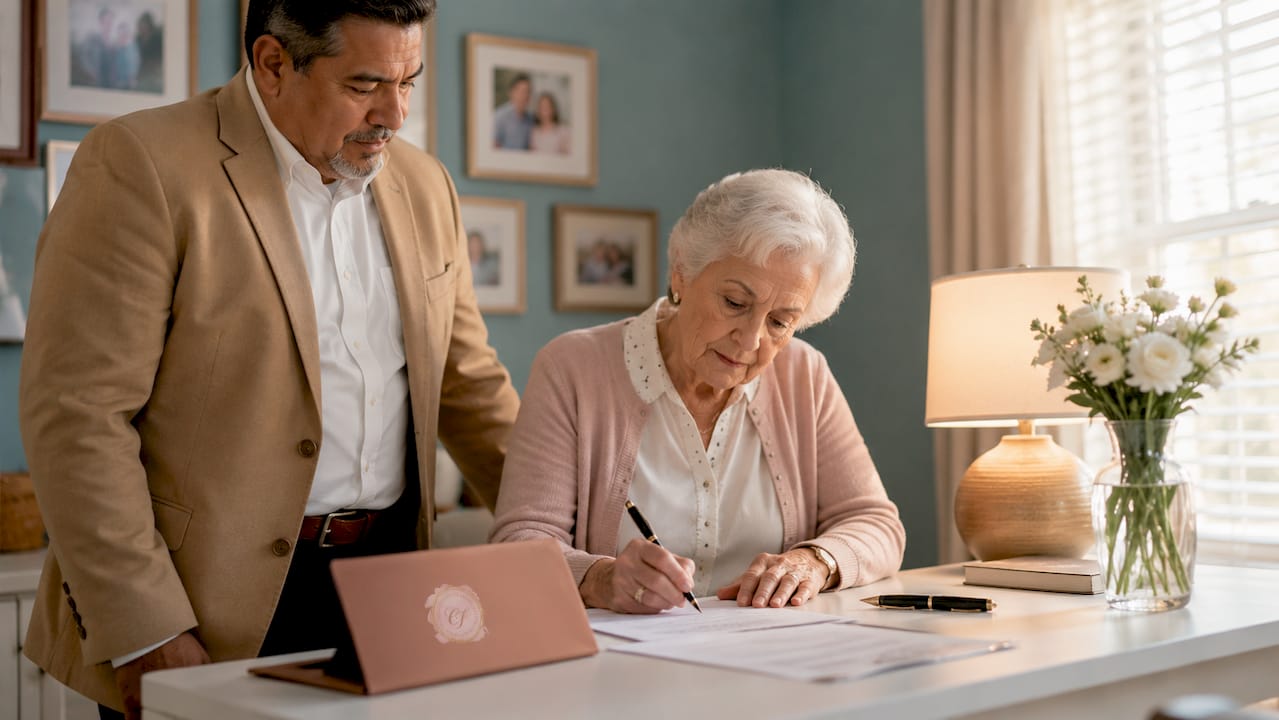
Florida's witness rule exists to prevent undue influence. A family member who stands to benefit from a particular medical outcome should not be the sole person confirming your wishes. The law builds in this protection by requiring at least one independent witness.
The consequences of improper execution are serious. A living will signed without two qualifying witnesses is not legally valid under Florida law. Hospitals and clinicians will not honor it, regardless of how clearly it expresses your wishes.
What the two-witness rule actually means
The two witnesses must be physically present when you sign. They do not sign later or separately. They watch you sign, then they sign the document themselves to attest to your competence and willingness. This is called "subscribing" the document, and it is a legal validity requirement under Florida law.
Common disqualifying relationships for witnesses include:
- Your spouse
- A parent, child, sibling, or grandchild
- Anyone related to you by blood or marriage
- Your designated healthcare surrogate
- Anyone who would inherit from your estate
Pro Tip: Ask a coworker, neighbor, or friend to serve as your independent witness. They need no legal training. They just need to be an adult, unrelated to you, and present when you sign.
Is notarization optional or recommended for Florida living wills?
Notarization is not legally required for a Florida living will, but it does add practical value. A notarized living will carries what legal professionals call "self-proving" status. That means the document is harder to challenge because a commissioned notary has independently verified your identity and signature.
Notarization becomes especially useful in two situations. First, if you spend time in another state, a notarized Florida living will is more likely to be recognized by out-of-state healthcare providers. Second, if family members later dispute the document's authenticity, notarization provides an extra layer of verification that witnesses alone may not offer.
Notarization adds authentication without replacing the witness requirement. A notarized document that lacks two qualified witnesses is still invalid under Florida law. The notary's seal does not fix a witness defect.
A living will notarized but improperly witnessed is legally void in Florida. Witness compliance is the foundation. Notarization is the reinforcement.
Reasons Florida residents choose to notarize their living wills anyway:
- Peace of mind and reduced risk of family challenges
- Easier acceptance by out-of-state hospitals or care facilities
- Stronger documentation for estate planning files
- Alignment with other Florida estate planning documents like powers of attorney, which do require notarization
For more context on how notarization applies to related documents, the Cflegalformhelp guide on Florida will notarization covers the distinctions clearly.
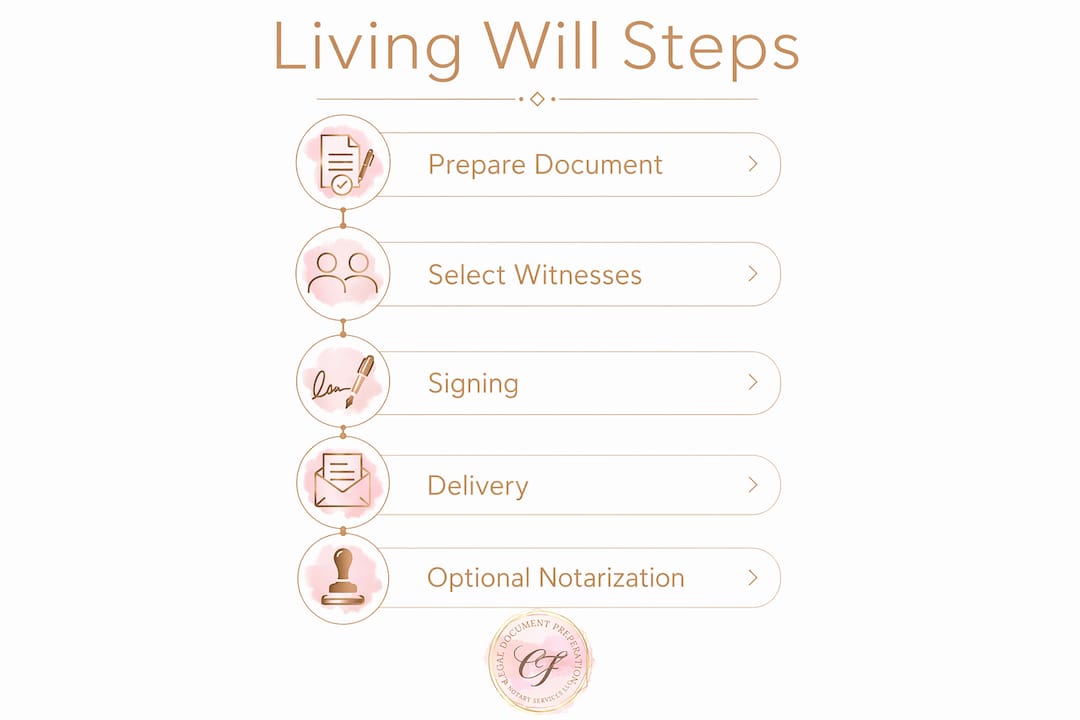
How to execute a Florida living will step by step
Proper execution is not complicated, but each step must be done correctly. Skipping or reordering steps can invalidate the entire document.
- Draft the document. Use a Florida-specific form. Generic out-of-state templates frequently miss Florida's unique witness requirements and can render the document invalid. The Florida Bar and Florida Agency for Health Care Administration both publish compliant templates.
- Write clear directives. State your wishes about life-prolonging procedures under specific conditions. Florida living wills are triggered only under specific medical conditions such as terminal illness, end-stage condition, or persistent vegetative state. They do not govern routine healthcare decisions.
- Select two qualified witnesses. Confirm neither witness is your spouse, blood relative, or healthcare surrogate. At least one must be completely unrelated to you.
- Sign in front of both witnesses at the same time. All three parties must be in the same room. You sign first. Both witnesses then sign immediately after, in your presence.
- Add notarization if desired. If you choose to notarize, a Florida-commissioned notary public verifies your identity and witnesses or acknowledges your signature. Cflegalformhelp offers mobile notary services that come to your location, which is convenient if you have mobility limitations.
- Deliver copies to your healthcare providers. Florida law requires you to provide your living will to your primary physician. The physician or healthcare facility must place it in your medical records promptly. Execution alone does not make a living will enforceable if no one has it.
- Keep copies accessible. Give a copy to your healthcare surrogate, a trusted family member, and your attorney if you have one. Store the original in a place that is easy to locate in an emergency.
Document delivery summary
| Step | Who receives it | Why it matters |
|---|---|---|
| Primary physician | Your doctor's office | Required by Florida law for medical record placement |
| Healthcare surrogate | The person you designated | They need it to act on your behalf |
| Hospital or care facility | Any facility where you receive care | Ensures staff can access it during treatment |
| Personal file | You or a trusted contact | Backup in case other copies are unavailable |
Pro Tip: Florida does not maintain a statewide living will registry. Store a digital copy in a secure cloud folder and tell your surrogate exactly where to find it.
What are the most common mistakes with Florida living wills?
Most living will problems fall into a small number of categories. Knowing them in advance saves significant stress later.
Using an out-of-state form. Generic forms from national legal websites often omit Florida's witness relationship restrictions. Florida-specific forms are required because Florida's witness rules differ from many other states that rely on notarization instead. A form that works in Georgia or Texas may be invalid in Florida.
Wrong witnesses. Choosing a spouse, sibling, or adult child as a witness is the single most common execution error. The document looks complete but fails the legal standard. Hospitals verify witness compliance first, and a notarized but improperly witnessed document is still void.
Failing to deliver the document. Signing a living will and leaving it in a drawer at home does not make it enforceable. Delivering the living will to your primary physician and healthcare facility is a practical requirement for the document to function when needed.
Confusing a living will with a last will. A living will governs healthcare decisions while you are alive but incapacitated. A last will governs the distribution of your assets after death. Florida does require notarization for a last will and testament. Mixing up the two leads people to either over-prepare or under-prepare their living will.
Never updating the document. A living will signed years ago may no longer reflect your current wishes or medical situation. Review it after major health changes, after a divorce, or when your designated surrogate is no longer available or appropriate.
Key takeaways
Florida living wills require two qualified witnesses, not notarization, for legal validity under Fla. Stat. § 765.302, and delivering the document to your physician is what makes it enforceable in practice.
| Point | Details |
|---|---|
| Notarization is not required | Florida law requires two witnesses, not a notary, for a valid living will. |
| Witness relationships matter | At least one witness must be unrelated by blood or marriage to the principal. |
| Notarization adds protection | A notarized living will is harder to challenge and more portable across state lines. |
| Delivery is mandatory | Florida law requires you to give your living will to your primary physician for placement in medical records. |
| Use Florida-specific forms | Generic out-of-state templates often miss Florida's unique witness rules and can invalidate the document. |
What I've learned from helping clients execute living wills in Florida
After working with hundreds of clients on Florida estate planning documents, one pattern stands out clearly. People spend more time worrying about notarization than about witness selection. That is the wrong priority.
Witness compliance is the legal foundation of a Florida living will. A document with a notary seal but the wrong witnesses is worthless at the hospital. A document with two proper witnesses and no notary seal is fully valid. That distinction matters enormously when a family is in crisis and medical staff need to act quickly.
I also see clients skip the delivery step far too often. They sign everything correctly, file the document at home, and never tell their doctor it exists. Florida law is clear that the living will must reach your physician's medical records. Practical enforceability depends on ongoing communication and accessibility, not just the signing ceremony.
My advice: choose your witnesses carefully, use a Florida-specific form, and hand-deliver a copy to your doctor's office the same week you sign. If you want notarization for extra peace of mind, add it. But never let the notarization question distract you from getting the witnesses right.
— Cristina
Cflegalformhelp can prepare and notarize your Florida living will
Preparing a legally compliant Florida living will takes more than downloading a form. Cflegalformhelp provides flat-fee living will document preparation using Florida-specific templates that meet all witness and execution requirements under Chapter 765.
If you want notarization added for extra protection, Cflegalformhelp's mobile notary service comes to your home, office, or care facility across South Florida, including Naples. Services are available in English and Spanish, with transparent pricing and no hidden fees. Whether you are preparing your first healthcare directive or updating an existing one, Cflegalformhelp makes the process clear and correct from the first step to the final delivery.
FAQ
Does a Florida living will need to be notarized?
No. Florida law does not require notarization for a living will to be valid. Two qualified witnesses are the legal requirement under Fla. Stat. § 765.302.
Who can witness a living will in Florida?
Both witnesses must be adults present at signing. At least one must not be a spouse or blood relative of the principal, and neither can be the designated healthcare surrogate.
What happens if my living will has the wrong witnesses?
A living will with disqualified witnesses is legally invalid in Florida. Hospitals will not honor it, and notarization cannot correct the defect.
Do I need to file my Florida living will with a court or registry?
Florida does not maintain a statewide living will registry. You must deliver a copy directly to your primary physician, who is required to place it in your medical records.
What is the difference between a living will and a last will in Florida?
A living will directs healthcare decisions during incapacity while you are alive. A last will distributes your assets after death and does require notarization in Florida.