
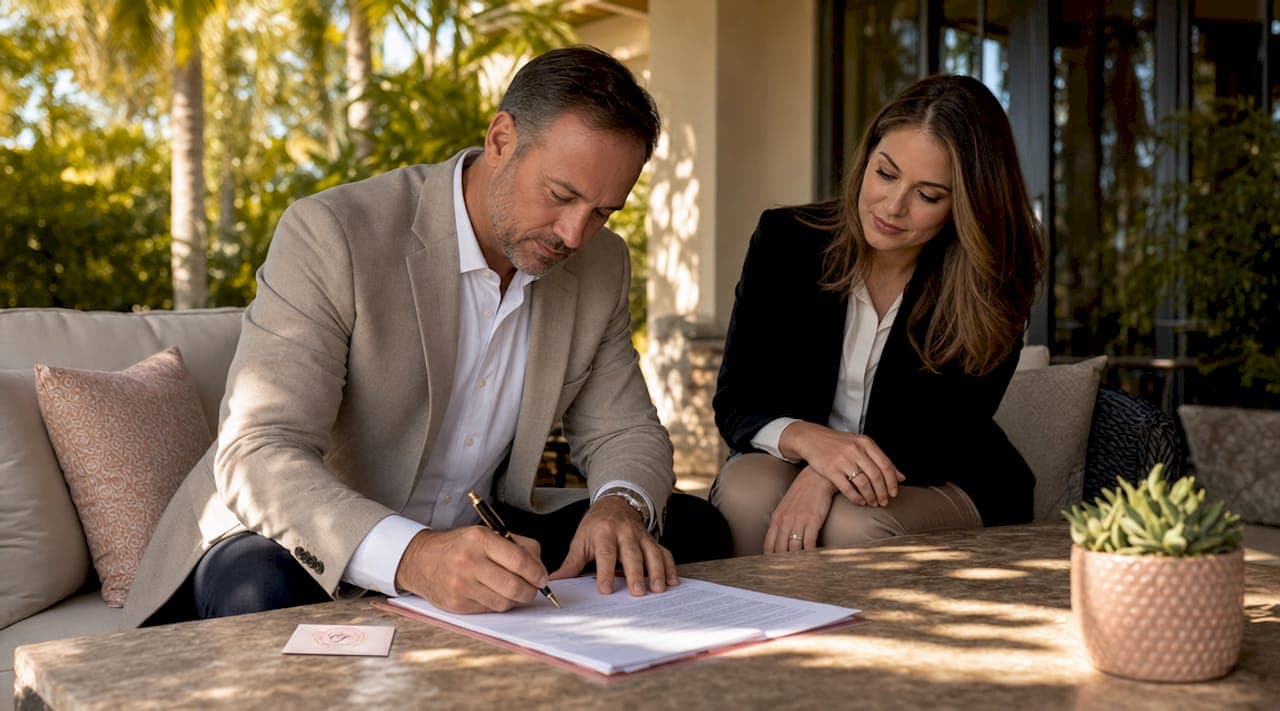
Florida wills do not require notarization to be legally valid, but notarization is the single most practical step you can take to protect your estate from probate complications. Understanding why wills need notarization in Florida means understanding the difference between a will that is legally valid and one that is probate-ready. These are not the same thing, and confusing them costs Florida families real time and money every year. This guide explains the legal requirements, the role of the self-proving affidavit, and exactly how to notarize a Florida will correctly in 2026.
Why wills need notarization in Florida: the core legal distinction
The foundation of Florida will law is simpler than most people expect. Florida wills do not require notarization to be legally valid, provided the testator and two witnesses sign correctly. That single fact surprises most people who assume notarization is always mandatory for legal documents. Attorney Matthew Shapiro confirms notarization is not legally required for validity but is a practical tool to facilitate probate. The distinction matters enormously when you are planning your estate.
What Florida law does require is a specific set of execution formalities. Miss any one of them and the will is invalid regardless of whether a notary was present. Here is what the statute demands:
- The will must be in writing. Oral wills are not recognized under Florida law.
- The testator must sign the will at the end, or direct another person to sign on their behalf in the testator's presence.
- Two witnesses must sign the will in the presence of the testator and in the presence of each other.
- All three parties, the testator and both witnesses, must be present simultaneously during the signing.
Execution errors such as separated witness signatures can invalidate a will even if a notary was present and signed off on the document. This is the most common mistake people make when preparing their own wills. Practitioners consistently caution that notarization does not fix improperly executed wills, and proper witness presence and signing order remain the top priority. Get the execution right first. Notarization comes after.
What does notarization actually do for a Florida will?
Notarization of a Florida will creates what is called a self-proving affidavit, governed by Florida Statute § 732.503. This affidavit is a sworn statement signed by the testator and both witnesses before a notary public at the time the will is executed. It is attached to the will and serves as advance proof that the will was signed correctly.

Here is why that matters in practice. When a will enters probate without a self-proving affidavit, the probate court must verify that the will was properly executed. That verification requires testimony or sworn statements from the witnesses who were present at signing. If those witnesses are unavailable, deceased, or simply unwilling to cooperate years after the fact, the court faces an evidentiary problem that can delay the entire process. The Siegel Law Group notes that notarization reduces legal doubt and evidentiary burdens after death, helping families avoid exactly these probate delays.
The self-proving affidavit eliminates this problem entirely. The notarized affidavit stands in place of live witness testimony, allowing the probate court to accept the will without tracking anyone down. The practical benefits are significant:
- Probate proceeds faster because the court does not need to schedule witness hearings.
- Estate administration costs drop because attorneys spend less time on evidentiary work.
- The risk of a will being challenged on procedural grounds decreases substantially.
- Beneficiaries receive their inheritances sooner, with less stress on the family.
- Almost all attorney-prepared wills in Florida include a self-proving affidavit by default, which signals how strongly practitioners view it as standard practice.
Pro Tip: Sign the self-proving affidavit at the same signing session as the will itself. Returning later to add the affidavit creates timing complications and may require all parties to reassemble, which is often harder than it sounds.
What are the real risks of skipping notarization?
A will without a self-proving affidavit is not a defective will. It is simply a will that requires more work to probate. Without a self-proving affidavit, probate courts rely on witness affidavits or testimony to confirm the will's execution, and that process carries real risks.
Consider a common scenario: a Florida resident signs a will at age 55 with two coworker witnesses. Twenty years later, one witness has moved out of state, the other has passed away, and the family is left trying to prove the will's validity to a probate judge. This is not a hypothetical edge case. Missing self-proof often leads to probate delays and increased costs due to evidentiary challenges that could have been avoided with a single notarization session.
The specific risks of skipping notarization include:
- Witness unavailability. Witnesses may be deceased, incapacitated, or impossible to locate years after the will was signed.
- Witness refusal. A witness who is willing but hostile to the estate's beneficiaries can complicate proceedings even if they are reachable.
- Probate court delays. Judges cannot simply take the family's word that the will was properly executed. Evidence is required.
- Increased legal fees. Every hour an estate attorney spends tracking down witnesses or filing evidentiary motions adds to the estate's costs.
A will without a self-proving affidavit is valid. But valid and easy are not the same thing. The absence of notarization transfers the burden of proof from a piece of paper to a person, and people are far less reliable than documents.
One critical clarification: notarization does not prevent will contests based on capacity or undue influence. Substantive issues like testamentary capacity still must be proven irrespective of notarization status. Notarization handles the procedural proof of execution. It does not resolve disputes about the testator's mental state or whether someone pressured them into signing.
How to notarize a Florida will: steps, timing, and online options
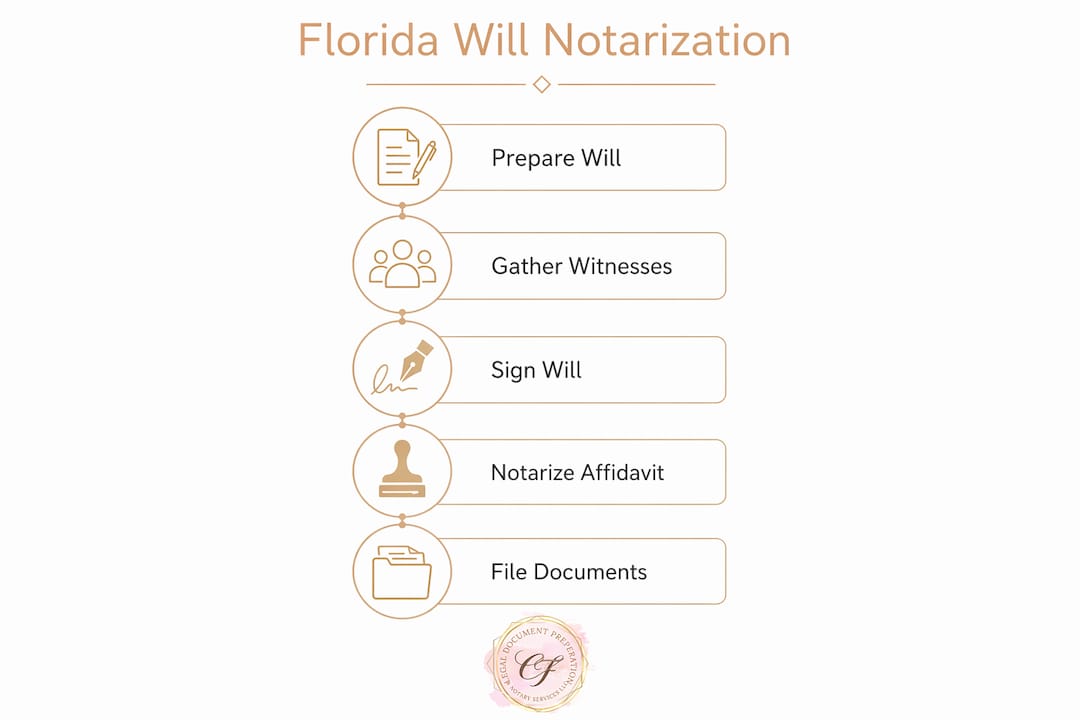
Notarizing a Florida will for self-proving purposes follows a specific sequence. Doing it out of order can nullify the self-proving effect even if a notary signs the document. Proper self-proving affidavits must be signed before a notary with an administered oath and jurat, and signatures out of order or a missing jurat invalidate the affidavit.
Follow these steps to notarize a Florida will correctly:
- Step 1: Execute the will first. The testator signs the will in the presence of both witnesses, and both witnesses sign in the presence of the testator and each other. This must happen before the notary affidavit is completed.
- Step 2: Have all parties present before the notary. The testator and both witnesses must appear before the notary public simultaneously. The notary cannot notarize one person's signature and then another person's signature at a separate time.
- Step 3: The notary administers an oath. The testator and witnesses swear or affirm that the will was signed correctly. The notary then completes the jurat on the self-proving affidavit.
- Step 4: All parties sign the affidavit. The testator and both witnesses sign the self-proving affidavit in the notary's presence. The notary signs and stamps last.
| Step | Who Acts | Common Mistake |
|---|---|---|
| Will execution | Testator + 2 witnesses | Witnesses signing at different times |
| Oath administration | Notary public | Skipping the administered oath |
| Affidavit signing | Testator + 2 witnesses + notary | Notary signing before all parties |
| Notary seal | Notary public | Missing jurat or incomplete stamp |
Florida law now also permits online notarization for self-proving affidavits. Chapter 2021-205 explicitly includes online notarization options for the statutory self-proving affidavit form. This means Florida residents can complete the notarization process remotely using a state-approved remote online notarization platform. However, missteps in online notarization can nullify the self-proving effect despite the notarization appearing complete. The acknowledgment language must match the statutory form exactly, and the remote notarization session must comply with Florida's specific procedural rules.
Pro Tip: If you use a mobile notary service for your will signing, confirm in advance that the notary is experienced with self-proving affidavits specifically. General notary experience does not guarantee familiarity with the oath and jurat requirements for Florida wills.
Two additional rules govern witness selection. Florida law prohibits a notary from notarizing signatures of family members, and a notary cannot notarize their own signature. The notary and the witnesses are entirely separate roles. Witnesses should also ideally not be beneficiaries under the will, as this creates potential conflicts that can complicate probate.
Key takeaways
Notarization makes a Florida will self-proving under Florida Statute § 732.503, eliminating the need for witness testimony at probate and protecting beneficiaries from costly delays.
| Point | Details |
|---|---|
| Notarization is not required for validity | A Florida will is legally valid with two witnesses and proper execution, even without a notary. |
| Self-proving affidavit speeds up probate | Florida Statute § 732.503 governs the affidavit that replaces live witness testimony in court. |
| Skipping notarization creates real risk | Unavailable witnesses can delay probate and increase legal costs for your beneficiaries. |
| Execution order is non-negotiable | The will must be fully executed before the self-proving affidavit is notarized. |
| Online notarization is now available | Florida's 2021 law allows remote notarization for self-proving affidavits when done correctly. |
What I've learned from helping Florida clients with will notarization
Most people come to me believing notarization is the most important step in making a will legal. My first job is always to correct that assumption without making them feel foolish for holding it. The confusion is understandable. Notarization is required for so many Florida documents, from powers of attorney to real estate deeds, that people reasonably assume it applies to wills the same way.
What I have seen repeatedly is that the families who struggle most in probate are not the ones whose loved ones skipped notarization entirely. They are the ones whose loved ones did most of it right but made one procedural error, like having witnesses sign on separate days or using a notary who skipped the administered oath. Those errors are invisible until the probate judge flags them, often months after the estate process begins.
My honest advice: treat the self-proving affidavit as a gift to your family, not a legal formality for yourself. You will not be there to explain what happened at the signing table. The affidavit speaks for you. And if you are handling this without an attorney, work with a qualified document preparer who knows the difference between notarizing a general document and completing a statutory self-proving affidavit correctly. The power of attorney notarization process follows similar precision requirements, and the same attention to detail applies here.
— Cristina
How Cflegalformhelp can help you notarize your Florida will
Getting your Florida will notarized correctly requires more than finding any notary with a stamp. It requires someone who understands the self-proving affidavit process, the oath requirements, and the signing sequence that Florida law demands.
Cflegalformhelp offers mobile notary and document preparation services specifically designed for Florida residents handling estate planning documents. Cristina Fernandez and her team come to you, coordinate all parties for the signing session, and complete the self-proving affidavit correctly the first time. Services are available in English and Spanish, with flat-fee pricing so you know the cost upfront. For clients who prefer professional document preparation alongside notarization, Cflegalformhelp also provides legal document preparation services that cover will drafting and execution support from start to finish.
FAQ
Does a Florida will have to be notarized to be valid?
No. A Florida will is legally valid when signed by the testator and two witnesses in each other's presence, with no notarization required. Notarization creates a self-proving affidavit that simplifies probate but does not affect the will's legal validity.
What is a self-proving affidavit in Florida?
A self-proving affidavit is a notarized statement signed by the testator and both witnesses at the time of will execution, governed by Florida Statute § 732.503. It allows the probate court to accept the will without requiring live witness testimony.
Can I notarize my Florida will online?
Yes. Florida's 2021 law update under Chapter 2021-205 permits online notarization for self-proving affidavits, but the process must strictly follow Florida's remote notarization rules and use the correct statutory acknowledgment language to remain valid.
What happens if my witnesses are unavailable when my will goes to probate?
Without a self-proving affidavit, the probate court requires witness testimony or sworn statements to confirm proper execution. If witnesses are deceased or unreachable, the process faces significant delays and potential legal costs for the estate.
Can the notary also serve as a witness on a Florida will?
No. The notary and the two witnesses are distinct roles under Florida law. A notary cannot notarize their own signature, and the witnesses must be separate individuals from the notary public who completes the self-proving affidavit.