

What you need to do before your immigration medical exam
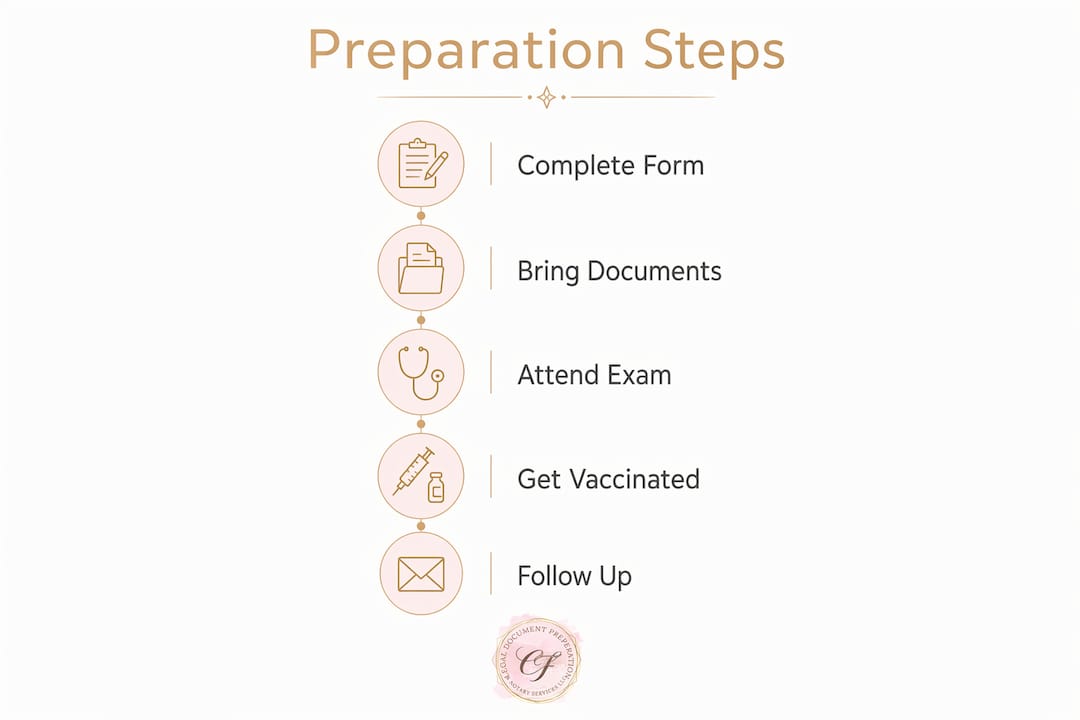
Immigration medical exam preparation comes down to a few non-negotiable steps. Get these right, and your appointment will go smoothly. Miss one, and you risk delays, extra costs, or a rejected Form I-693.
- Complete Form I-693, Part 1 before your appointment — but do not sign it. Per USCIS instructions, the civil surgeon must witness your signature in person.
- Gather all vaccination records with exact month, day, and year for every dose. Self-reported history is never accepted.
- Bring valid government-issued photo ID — an unexpired passport or driver's license. Minors need a birth certificate and a parent's ID.
- Find a USCIS-designated civil surgeon using the USCIS locator tool and schedule your appointment in advance.
- Collect medical records for any chronic conditions, prior tuberculosis exposure, mental health treatment, or ongoing medications.
- Leave the sealed Form I-693 envelope intact after the exam. Opening it before USCIS submission causes automatic rejection.
Table of Contents
- Why is the immigration medical exam required?
- What to bring to your immigration medical appointment
- Common mistakes that delay your immigration health check
- How Cflegalformhelp supports your immigration paperwork
- What happens step by step at the civil surgeon's clinic
- Which vaccinations are required and how to get your records
- What to do if health issues are found during the exam
- How Form I-693 results are submitted to USCIS and what to do next
- Key Takeaways
Why is the immigration medical exam required?
The exam exists to protect public health, not to evaluate your overall wellness. According to USCIS, four conditions can make an applicant inadmissible on health-related grounds: a communicable disease of public health significance, failure to show proof of required vaccinations, a physical or mental disorder with associated harmful behavior, and drug abuse or addiction.
The CDC's Division of Global Migration Health is clear that this exam is a targeted screening process, not a general health check. The civil surgeon is not required to diagnose or treat any condition outside the USCIS admissibility criteria. USCIS uses Form I-693 to document the results and vaccination record.
- Civil surgeons screen for communicable diseases, vaccination compliance, harmful behaviors, and drug abuse.
- Applicants may need follow-up tests such as blood work or chest X-rays if initial screening indicates a concern.
- Nonimmigrants generally do not need the exam unless a public health concern or officer discretion requires it.
What to bring to your immigration medical appointment
Arriving prepared saves time and money. A missing document can mean a second visit or redundant vaccinations.
- Form I-693 (most recent edition) with Part 1 completed and unsigned.
- Valid photo ID: unexpired passport or driver's license. For minors, bring an original birth certificate and a parent's government-issued ID.
- Vaccination records with exact dates for every dose. Civil surgeon experts recommend organized records to avoid costly repeat vaccinations.
- Medical records for chronic illnesses, tuberculosis history, mental health treatment, or any condition requiring ongoing medication. Bring the actual medication names, not just descriptions.
- Payment: USCIS does not regulate civil surgeon fees, and many do not accept insurance for the immigration exam. Confirm the fee and payment method before your appointment.
A useful pre-appointment step: review the Florida immigration document checklist to confirm you have everything organized before you walk in.
Common mistakes that delay your immigration health check
Most delays in the immigration exam process are avoidable. These are the errors that come up most often.
- Signing Form I-693 before the civil surgeon instructs you. The surgeon must witness your signature. Signing early invalidates the form.
- Bringing self-reported vaccine history without documentation. Undocumented history is treated as no history. The civil surgeon will require proof or administer the vaccines, adding cost and time.
- Forgetting valid photo ID or minor documentation. The exam cannot proceed without identity verification.
- Skipping follow-up appointments. If the civil surgeon orders an IGRA blood test, chest X-ray, or specialist referral, you must complete it. Incomplete results mean an incomplete Form I-693.
- Opening the sealed envelope. Breaking the seal before USCIS submission causes rejection and processing delays.
- Submitting Form I-693 separately from Form I-485 when required. For applications filed after December 2, 2024, concurrent submission is required. A Form I-693 signed after November 1, 2023 is only valid while a Form I-485 is pending.
- Not comparing civil surgeon fees. No federal fee regulation exists for civil surgeons, so rates vary. Contact multiple providers and ask about insurance acceptance before booking.
Pro Tip: Check whether the civil surgeon's office accepts your health insurance before scheduling. Many do not cover the immigration exam specifically, even if they accept your plan for other services.
How Cflegalformhelp supports your immigration paperwork
Getting the paperwork right matters as much as showing up to the exam. Cflegalformhelp, founded by Cristina Fernandez, a certified legal document preparer and immigration paralegal, helps immigrants in Florida organize and prepare their immigration documents correctly from the start.
- Form I-693 guidance: Cflegalformhelp walks you through completing Part 1 accurately and explains exactly when and how to sign, so the civil surgeon can proceed without delays.
- Vaccination and medical record organization: The team helps you compile and present your records in the format civil surgeons expect.
- Notary services: Identity documents and required signatures during the immigration process can be notarized on-site or remotely, adding a verified layer of compliance.
- USCIS submission support: Cflegalformhelp reviews your paperwork for completeness before it goes to USCIS, reducing the risk of rejection.
- Bilingual support in English and Spanish: For immigrants more comfortable in Spanish, every step of the process is explained clearly in both languages.
- Flat-fee, transparent pricing: No surprise costs. You know what you are paying before any work begins.
Explore Cflegalformhelp's immigration forms help to see how the team can support your preparation from document assembly through submission.
What happens step by step at the civil surgeon's clinic
Knowing the sequence helps you stay calm and prepared on the day of your appointment.
- Identity verification: Clinic staff confirm your identity using your photo ID. Your photo may be taken for the record.
- Medical history review: The civil surgeon reviews your completed Form I-693 Part 1 and asks about existing conditions, medications, and relevant history.
- Physical examination: The physical exam covers eyes, ears, nose, throat, heart, lungs, abdomen, lymph nodes, and skin, plus a mental health screening.
- Lab tests or X-rays: Depending on your age and history, the surgeon may order a chest X-ray, blood tests, or an IGRA test for tuberculosis.
- Vaccination review: The surgeon checks your records against CDC requirements and administers any missing vaccines or documents waivers.
- Form completion and sealing: The civil surgeon completes, signs, and seals Form I-693. You sign in the surgeon's presence at this point.
The entire visit typically takes a moderate amount of time, longer if lab work is needed.
Which vaccinations are required and how to get your records
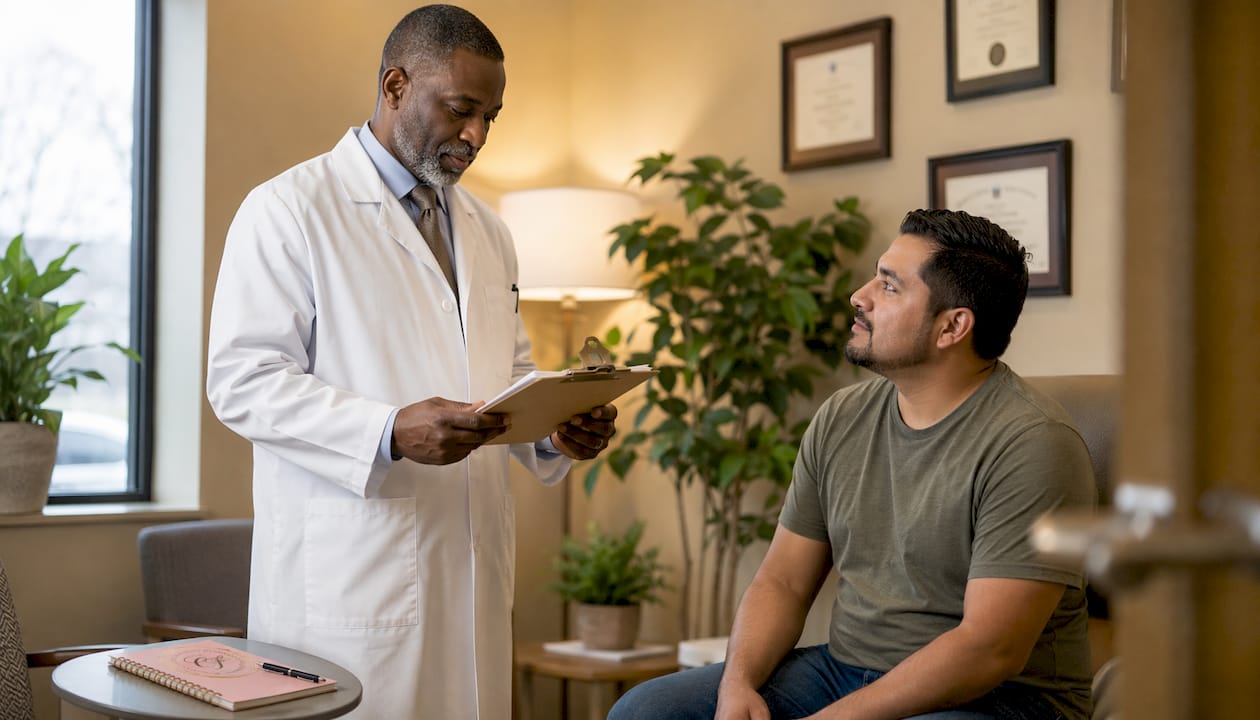
Vaccine requirements follow CDC guidelines and are based on your age. The required vaccines for immigration purposes include: Hepatitis A, Hepatitis B, Influenza, Haemophilus influenzae type b (Hib), Measles, Meningococcal, Mumps, Pneumococcal, Pertussis, Polio, Rotavirus, Rubella, Tetanus and diphtheria toxoids, and Varicella.
If you do not have records, contact your previous healthcare providers, your country's health ministry, or your school's immunization records office. Missing vaccines can be administered at the civil surgeon's office or at a pharmacy before your appointment. Getting them beforehand is usually faster and may cost less. If a medical reason prevents you from receiving a specific vaccine, the civil surgeon can recommend a waiver.
Understanding certified copies for immigration can also help when you need to obtain official vaccination documentation from abroad.
What to do if health issues are found during the exam
A finding during the exam does not automatically mean your application is denied. Results fall into two categories: Class A conditions, which can make you inadmissible, and Class B conditions, which are noted but do not necessarily bar entry.
If the civil surgeon identifies a concern, follow up promptly. Complete any referred specialist visits or additional tests as quickly as possible. Delays in completing follow-up extend the time before Form I-693 can be finalized. For tuberculosis history, bring prior X-ray films and written certification from your treating physician, including treatment dates and medications. For mental health or substance abuse history, a written certification with diagnosis, treatment duration, and prognosis is required.
A finding is a step in the process, not the end of it. Staying organized and responsive keeps your application moving.
How Form I-693 results are submitted to USCIS and what to do next
After the civil surgeon seals Form I-693, you have two options depending on your application type. If you are filing Form I-485 (Adjustment of Status), you submit the sealed Form I-693 concurrently with your I-485 package. If USCIS requests it separately, you submit it in response to their Request for Evidence (RFE).
Do not mail the sealed envelope on its own without the required cover documentation. Track your submission using USCIS's online case status tool with your receipt number. If USCIS requests additional medical evidence, respond within the stated deadline. Form I-693 validity is tied to a pending Form I-485, so do not let your application lapse after the form is signed.
For additional guidance on organizing your full immigration paperwork package, the benefits of immigration document preparation services article covers what professional preparation support looks like in practice.
Key Takeaways
Thorough immigration medical exam preparation requires completing Form I-693 Part 1 before your appointment, bringing documented vaccination records with exact dates, and keeping the sealed envelope intact until USCIS submission.
| Point | Details |
|---|---|
| Form I-693 handling | Complete Part 1 before the appointment but sign only in the civil surgeon's presence; never open the sealed envelope. |
| Vaccination records | Bring official records with exact dates for every dose; self-reported history is not accepted. |
| Civil surgeon fees | USCIS does not regulate fees, so contact multiple providers and confirm insurance acceptance before booking. |
| Class A vs. Class B findings | Class A conditions may affect admissibility; Class B conditions are noted but do not automatically bar entry. |
| Concurrent submission | For applications after December 2, 2024, submit Form I-693 together with Form I-485, not separately. |