
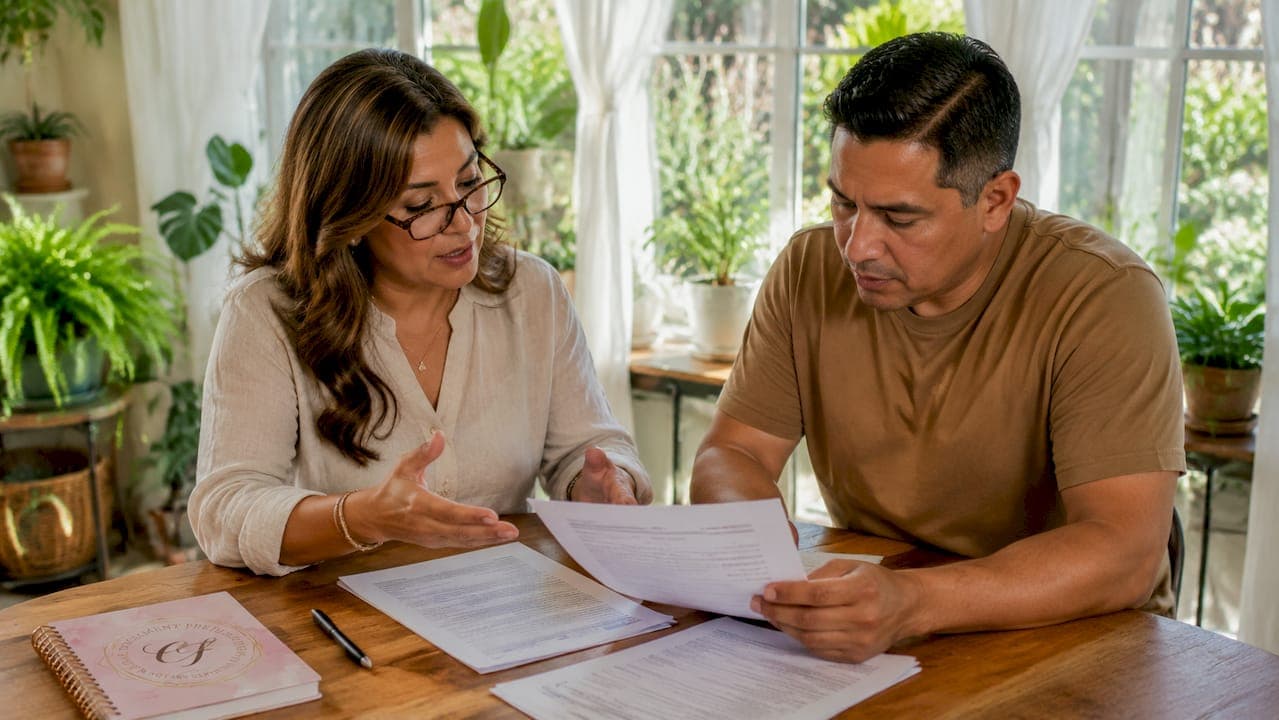
A bilingual notary signing session is a notarization conducted by a professional fluent in at least two languages, ensuring every signer fully understands the legal documents before them. This is not simply translation. The notary explains complex legal language in plain terms, verifies identity, witnesses signatures, and applies their official seal, all within the signer's own language. For Spanish-speaking clients in Florida, immigrants handling immigration paperwork, or businesses closing real estate deals with multilingual parties, this service removes the single biggest risk in notarization: signing something you do not fully understand.
What is a bilingual notary signing session and how does it work?
A bilingual notary signing session follows the same legal framework as any standard notarization but adds a critical layer: the notary communicates the full meaning of every document in the signer's preferred language. According to research on bilingual closing processes, these sessions reduce confusion and errors in high-stakes transactions like real estate closings. That reduction matters because a misunderstood clause in a mortgage document or a power of attorney can trigger disputes that cost thousands to resolve.
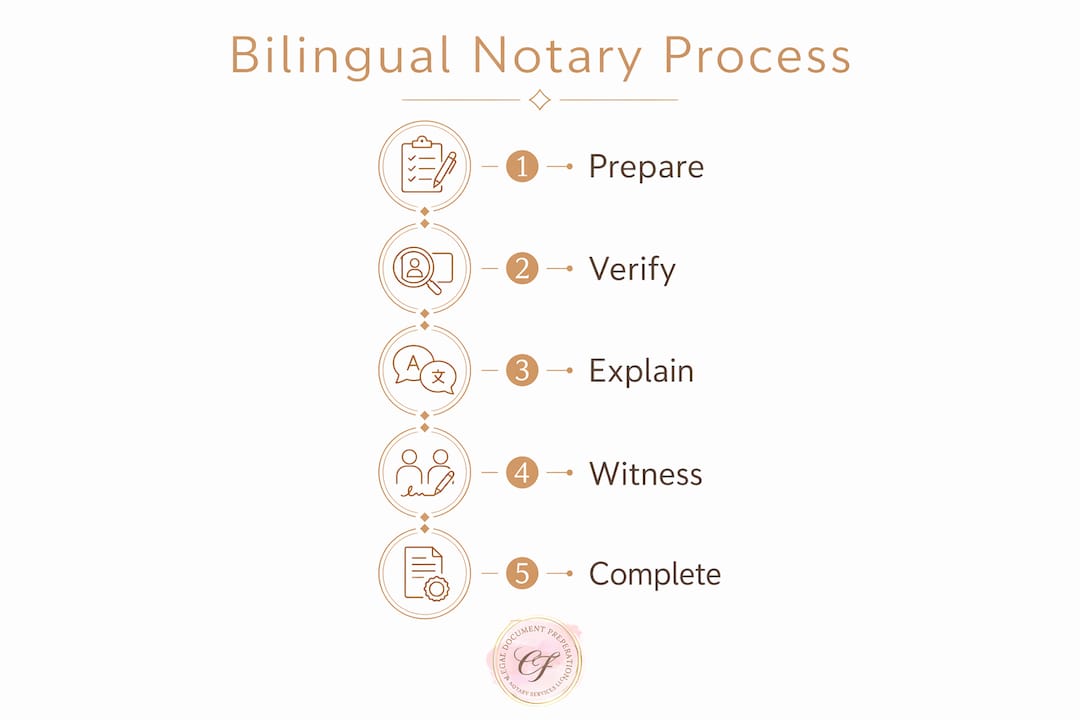
The session typically follows this sequence:
- Document preparation. The notary reviews all documents before the appointment to identify sections requiring detailed explanation. Unsigned originals must be brought to the session.
- Identity verification. Signers must bring a current government-issued photo ID with a name that exactly matches the documents being signed. A passport, driver's license, or state ID all qualify.
- Document walkthrough. The notary explains each document in both languages, translating legal jargon into plain language the signer can act on confidently.
- Signature witnessing. The notary watches each signature being applied, confirming the signer is acting voluntarily and with full understanding.
- Notarial act and seal. The notary completes the notarial certificate, applies their official stamp or seal, and records the transaction in their notary journal.
- Remote option. Remote online notarization is legal in 47 states plus Washington D.C., meaning bilingual sessions can happen via secure video platforms without requiring physical presence.
Pro Tip: Schedule your bilingual notary session with enough time to ask questions. Rushing through a mortgage closing or immigration affidavit is how costly errors happen. Budget at least 30 to 60 minutes for complex document sets.
How do bilingual notary services differ from standard notarization?
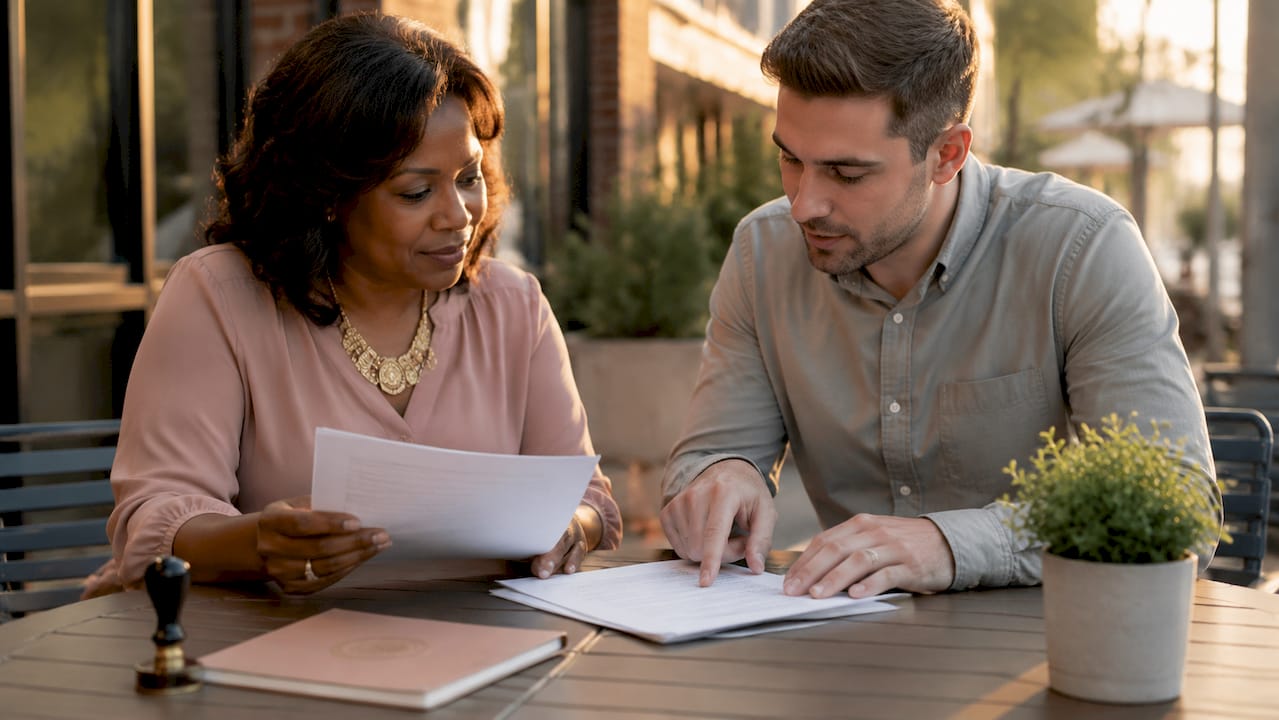
Standard notarization confirms identity and witnesses a signature. It does not require the notary to speak the signer's language or explain what the document says. A bilingual notary service goes further on every dimension that matters for non-English speakers.
| Feature | Standard notary | Bilingual notary |
|---|---|---|
| Language of service | English only | Two or more languages |
| Document explanation | Not required | Full explanation in signer's language |
| Cultural awareness | Not addressed | Tailored to cultural context |
| Risk of miscommunication | Higher for non-English speakers | Significantly reduced |
| Ideal for | General English-speaking clients | Immigrants, multilingual transactions, diverse businesses |
Bilingual notaries understand cultural nuances and tailor their approach accordingly, making signers feel respected rather than processed. This cultural competence is not a soft benefit. It directly affects whether a signer catches a problematic clause, asks the right question, or walks away with false confidence. A standard notary in Florida has no obligation to explain what a document means. A bilingual notary takes on that responsibility as a core part of the service.
The additional training required for bilingual notaries also sets them apart. Beyond standard state certification, they must demonstrate language proficiency and often hold credentials in legal document preparation, translation, or paralegal work. Cristina Fernandez of Cflegalformhelp, for example, is a certified legal document preparer and immigration paralegal, which means her bilingual notary sessions carry both linguistic and legal document expertise.
What are the advantages of bilingual notary signing sessions?
The practical benefits of a bilingual notary signing session extend well beyond comfort. They protect you legally, financially, and procedurally.
- Signer comprehension prevents disputes. Ensuring comprehension during notarization leads to better decisions and avoids costly mistakes. When a signer truly understands what they are agreeing to, the chance of a future legal challenge drops sharply.
- Fewer errors in completed documents. Bilingual notaries catch name mismatches, missing signatures, and incomplete fields before the seal goes on. Fixing these after the fact often requires refiling, legal fees, or court appearances.
- Confidence in complex transactions. Real estate closings, business formation documents, and immigration affidavits involve dense legal language. Bilingual agents explain fine print, improving client confidence and reducing the chance of a signer backing out or disputing terms later.
- Inclusive service for immigrant and multilingual communities. Spanish speakers, Haitian Creole speakers, and other immigrant communities in South Florida face a real disadvantage when legal documents are only explained in English. A bilingual notary service closes that gap directly.
- Efficiency in business transactions. For small businesses with multilingual ownership or partnerships, bilingual notarization of LLC formation documents, operating agreements, or commercial leases removes a bottleneck that would otherwise require hiring a separate interpreter.
Pro Tip: If you are closing a real estate transaction with a non-English-speaking party, request a bilingual notary at the time you schedule the closing. Last-minute requests often result in delays or a notary who speaks the language but lacks the legal document knowledge to explain the terms accurately.
Confidence and accuracy in bilingual signings reduce the risk of future disputes, improving outcomes for all parties involved. That is not a minor administrative benefit. It is the difference between a clean transaction and one that ends up in mediation.
How to find and prepare for a bilingual notary signing session
Finding a qualified bilingual notary requires more than a quick Google search. You need someone with verified language proficiency, proper state certification, and experience with the document type you need notarized.
Where to look:
- Search the National Notary Association directory and filter by language specialty
- Ask your real estate agent, immigration attorney, or title company for referrals
- Contact services like Cflegalformhelp directly, which specialize in bilingual notary services for English and Spanish-speaking clients in South Florida
- Check online platforms that list certified notaries by language and service area
What to verify before booking:
- State notary commission is current and in good standing
- Language proficiency is documented or demonstrable, not just self-reported
- Experience with your specific document type (real estate, immigration, business formation)
- Availability for mobile or remote sessions if you cannot travel
How to prepare for your appointment:
- Bring a valid, unexpired government-issued photo ID. The name on your ID must exactly match the name on the documents being signed. This requirement is critical and frequently overlooked.
- If your name has changed due to marriage or divorce, bring legal proof such as a marriage certificate or court order.
- Bring all documents unsigned. Notaries must witness the actual signing act.
- Gather any supporting paperwork referenced in the documents, such as property deeds, prior agreements, or immigration case numbers.
| Preparation item | Why it matters |
|---|---|
| Government-issued photo ID | Required for identity verification before any notarization |
| Unsigned documents | Notary must witness the signature in real time |
| Proof of name change | Name discrepancies void the notarization without legal proof |
| Supporting paperwork | Ensures completeness and prevents delays or return visits |
| Scheduled appointment time | Allows adequate time for bilingual explanation of all terms |
For Florida residents, mobile notary services offer an additional option: a certified bilingual notary comes to your home, office, or any agreed location, which is especially useful for elderly clients, business owners, or anyone managing a complex multi-document closing.
Key takeaways
A bilingual notary signing session is the most reliable way to protect non-English speakers from signing documents they do not fully understand, reducing legal risk and transaction errors in one appointment.
| Point | Details |
|---|---|
| Core definition | A bilingual notary conducts the full notarization process in the signer's preferred language. |
| Beyond translation | Bilingual notaries explain legal jargon, not just words, reducing the risk of disputes. |
| Preparation is critical | Bring a matching photo ID, unsigned documents, and proof of any name changes. |
| Remote sessions are available | Online notarization is legal in 47 states, making bilingual access more flexible than ever. |
| Choose verified credentials | Confirm state certification, language proficiency, and document-type experience before booking. |
Why bilingual notarization matters more than most people realize
I have sat across from clients who nodded through an entire document explanation in English, signed everything, and later called me in a panic because they had no idea what they had agreed to. That moment is what bilingual notarization is designed to prevent. It is not a courtesy service. It is a legal safeguard.
What surprises most people is how much the cultural layer matters beyond the language itself. Legal concepts like "power of attorney," "indemnification," or "irrevocable trust" do not have clean one-to-one translations in Spanish. They carry different cultural weight and different assumptions about family, authority, and obligation. A bilingual notary who understands those nuances explains the concept, not just the words. That distinction changes how a signer processes what they are agreeing to.
I also see a persistent misconception that bilingual notarization is only for immigration documents. In reality, the clients who benefit most are often those closing on their first home, forming a business partnership, or signing a family law agreement. These are life-changing documents. The risk of miscommunication in signings is highest precisely when the stakes are highest.
My honest advice: do not treat language access as a secondary concern when choosing a notary. Treat it as the primary qualification. A notary who cannot explain what you are signing in a language you fully understand is not the right notary for your transaction.
— Cristina
Bilingual notary services from Cflegalformhelp
Cflegalformhelp provides certified bilingual notary and legal document preparation services in English and Spanish throughout South Florida, with a focus on Naples and the surrounding area. Whether you need notarization for real estate closings, immigration affidavits, business formation documents, or family law paperwork, every session is conducted by Cristina Fernandez, a certified legal document preparer and immigration paralegal.
Appointments are available in person, mobile, and via remote online notarization for added flexibility. Flat-fee pricing means no surprises. If you are ready to schedule a session or want to learn more about available services, visit the mobile notary and loan signing page to book directly or explore the full range of bilingual document support options.
FAQ
What does a bilingual notary do differently?
A bilingual notary explains the full legal meaning of documents in the signer's preferred language, not just translating words but clarifying legal concepts, verifying identity, and witnessing signatures. Standard notaries are not required to explain document content at all.
Is a bilingual notary signing session legally valid?
Yes. A bilingual notary holds the same state-issued commission as any notary public. The bilingual element refers to how the session is conducted, not to a separate legal category. The notarization carries full legal weight.
What ID do I need for a bilingual notary session?
You need a current government-issued photo ID, such as a passport or driver's license, with a name that exactly matches the documents being signed. If your name has changed, bring legal proof like a marriage certificate.
Can I use a bilingual notary for remote online notarization?
Yes. Remote online notarization is legal in 47 states plus Washington D.C. and can be conducted bilingually via secure audio-video platforms, making it accessible for clients who cannot meet in person.
How do I find a qualified bilingual notary in Florida?
Search the National Notary Association directory by language, ask for referrals from your title company or immigration attorney, or contact Cflegalformhelp directly for certified bilingual notary services in Florida with verified credentials and flat-fee pricing.