
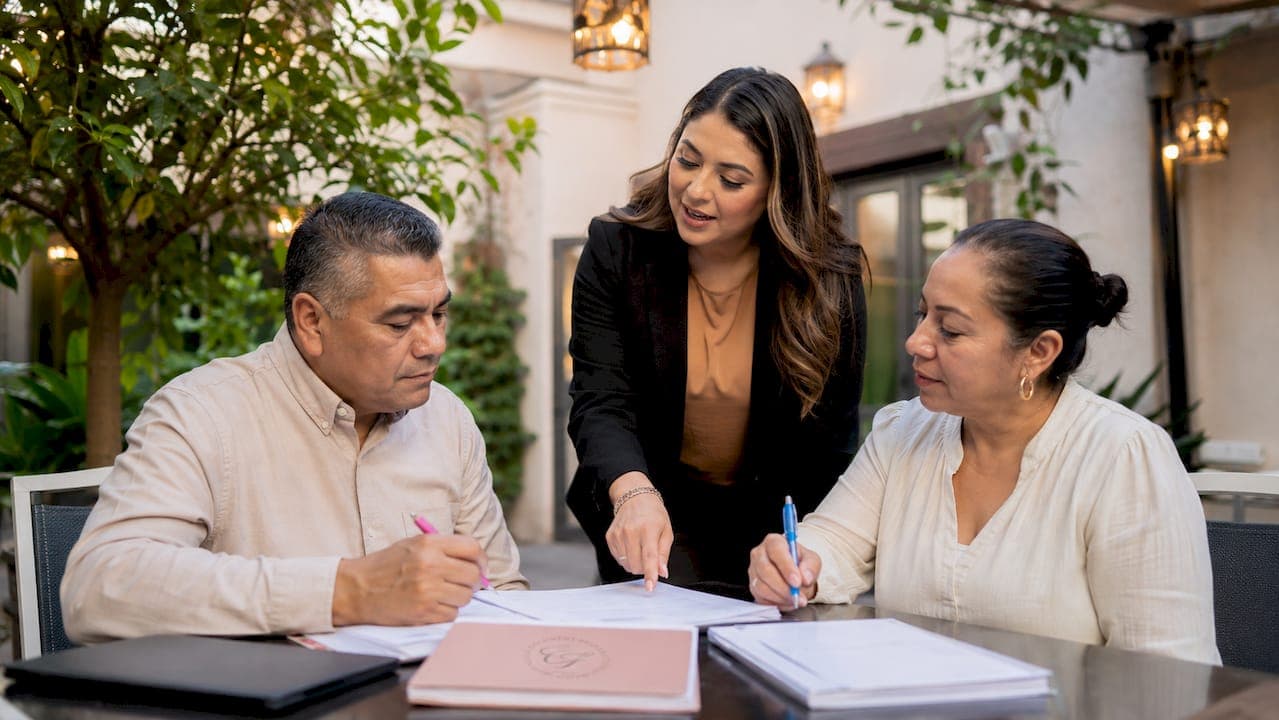
A bilingual paralegal is defined as a legal professional who combines paralegal training with fluency in two languages to support attorneys and clients across the full legal process. The role of bilingual paralegal explained simply means one person handles both the legal paperwork and the language gap, so nothing gets lost between a client and their case. The Bureau of Labor Statistics projects 39,300 annual paralegal openings through 2034, driven largely by workforce turnover. That demand reflects how central paralegals have become to legal operations, and bilingual paralegals fill an even sharper need as the United States client base grows more linguistically diverse. For individuals and small business owners who need legal support in English and Spanish, understanding this role is the first step toward getting real help.
What are the main duties of bilingual paralegals in legal settings?
Bilingual paralegals perform the full range of standard paralegal tasks, with language access woven into every step. Their duties are not limited to translation. They manage the entire client relationship from first contact to case close, in both languages.
The core duties include:
- Client intake: Conducting initial consultations in the client's preferred language, gathering facts, and recording information accurately so attorneys receive a complete picture from day one.
- Document review and drafting: Reviewing contracts, pleadings, and legal correspondence in both languages, then flagging issues for the supervising attorney. They draft documents under attorney supervision but do not provide legal advice.
- Scheduling and case management: Coordinating appointments, deadlines, and follow-ups across language lines. A missed deadline caused by a miscommunication is just as costly as a missed deadline caused by poor organization.
- Communication bridging: Serving as the consistent point of contact for clients who struggle with English, reducing the risk of missed information or procedural delays. Bilingual paralegals support intake by bridging language barriers during consultations and document management throughout the case.
- Non-certified document translation: Translating internal documents for attorney review. This is distinct from certified translation, which carries a formal legal attestation.
Pro Tip: Bilingual ability and legal knowledge are two separate skills. A paralegal who speaks Spanish fluently but lacks training in legal terminology can still produce inaccurate documents. Always confirm that a bilingual paralegal understands the legal concepts behind the words, not just the words themselves.
The value of these duties compounds over a case. When the same person who took the intake call also drafts the motion and follows up on the court date, the client's story stays consistent. That continuity is hard to replicate when you outsource translation to a third party who has no context for the case.

How do bilingual paralegals differ from certified court interpreters?
This distinction matters more than most clients realize, and getting it wrong carries real legal risk.
A bilingual paralegal and a certified court interpreter are not interchangeable. They serve different functions, require different credentials, and operate in different legal contexts.
| Role | Credentials required | Permitted functions | Not permitted |
|---|---|---|---|
| Bilingual paralegal | Paralegal training, bilingual proficiency | Client intake, document drafting, case management, internal communication | Interpreting at depositions, trials, or formal hearings |
| Certified court interpreter | State or federal court certification | Depositions, trials, hearings, formal legal proceedings | Providing legal advice or drafting legal documents |
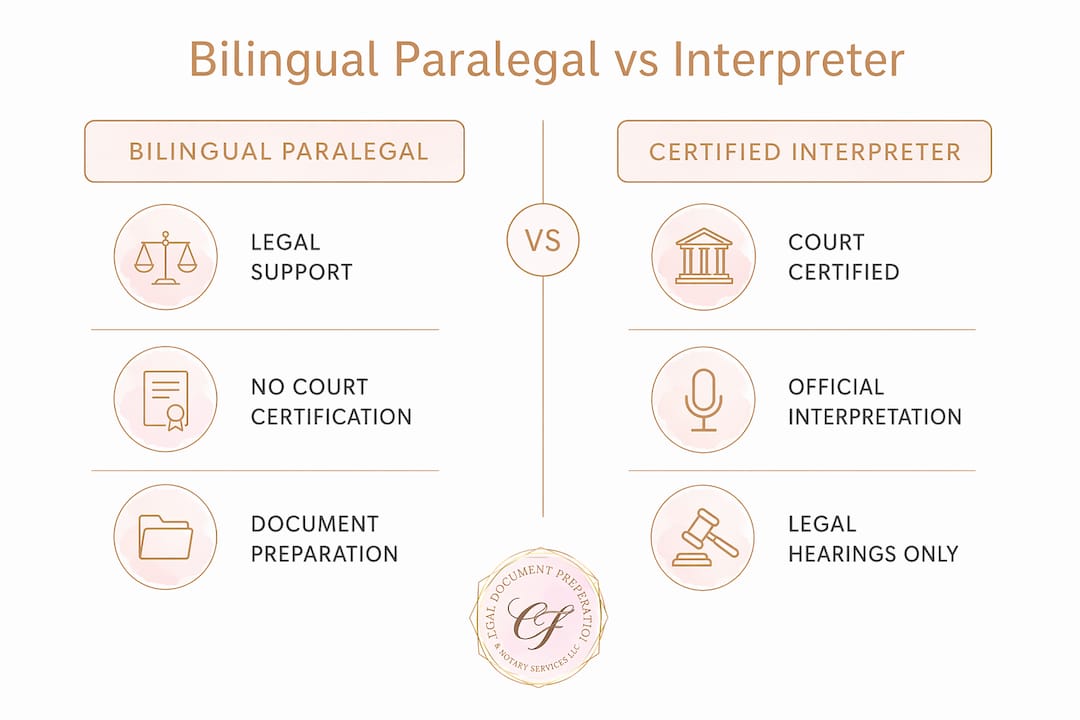
Legal standards in 2026 require court-certified interpreters for depositions and court hearings. Bilingual paralegals are explicitly discouraged in those formal contexts to protect due process. The reason is straightforward. A court record is a legal document. Every word spoken in a deposition or trial becomes part of that record, and errors in interpretation can affect verdicts.
Using uncredentialed persons for formal legal interpreting creates risks to legal record integrity and may cause overturned verdicts. That is not a theoretical risk. Courts have reversed decisions because interpretation was inadequate. The stakes are high enough that the legal system draws a hard line.
Legal interpreting standards have tightened to require specialized certification beyond bilingual fluency for court use. Bilingual fluency is a starting point, not a credential. A certified court interpreter completes formal training, passes written and oral exams, and often holds state or federal certification specific to legal proceedings.
Bilingual paralegals do not replace court-certified interpreters required in depositions and trials. Their role is supporting daily communication and case management. Think of it this way: a bilingual paralegal keeps the case moving every day, while a certified interpreter steps in for the formal moments that become part of the legal record. Both are necessary. Neither replaces the other.
What are the practical benefits for individuals and small business owners?
Hiring bilingual paralegal support is not just a convenience. For clients who do not speak English as a first language, it is often the difference between a case that moves forward and one that stalls.
- Faster, more accurate intake. When a client can explain their situation in their own language from the start, the attorney receives complete and accurate information. Gaps in intake create problems that take weeks to fix later in the case.
- Consistent communication throughout the case. Bilingual legal assistants improve client communication and reduce delays, especially in firms serving multilingual clients. A client who always speaks with the same bilingual paralegal builds trust and shares more relevant detail.
- Cost efficiency across the case lifecycle. Outsourcing translation to a third-party service for every document adds up quickly. A bilingual paralegal handles internal translation as part of their regular duties, without a per-document fee.
- Reduced procedural errors. Miscommunication between a client and a legal team is a leading cause of missed deadlines and incorrect filings. Bilingual paralegals catch those errors before they reach the attorney or the court.
- Unified support instead of fragmented services. Individuals and small business owners benefit by hiring bilingual paralegals who combine administrative and linguistic support, avoiding the siloed information typical with external translators.
Integrating bilingual paralegals into firm operations rather than outsourcing translation creates smoother client experiences and better case continuity. For a small business owner dealing with a contract dispute or an LLC formation, that continuity means fewer calls to explain the same facts twice and fewer documents sent back for correction.
Pro Tip: When vetting a bilingual paralegal, ask them to explain a specific legal concept, such as "consideration in a contract" or "service of process," in both languages. Conversational fluency is easy to spot. Legal terminology proficiency takes a targeted question to reveal.
What should you consider when engaging bilingual paralegal services?
Choosing the right bilingual paralegal support requires more than confirming that someone speaks two languages. A few focused questions will tell you whether the person or service is genuinely equipped for legal work.
- Assess legal terminology proficiency. Vetting bilingual professionals should focus on legal domain proficiency, not just conversational fluency, to ensure accuracy across jurisdictions and legal concepts. Ask directly about experience with the type of documents your case involves.
- Clarify the scope of services upfront. A bilingual paralegal prepares documents, manages communication, and supports case administration. They do not provide legal advice and do not serve as court interpreters. Confirm these boundaries before you begin so there are no surprises.
- Confirm coordination with the supervising attorney. Paralegals work under attorney supervision. If you are working with a document preparation service rather than a law firm, understand exactly what oversight exists and what falls outside their scope. You can review paralegal vs. attorney service differences to set the right expectations before you engage anyone.
- Check for relevant experience in your legal area. Immigration, family law, and business formation each use distinct terminology and procedures. A bilingual paralegal with experience in immigration forms brings different value than one trained primarily in real estate closings.
- Understand what certified translation means. If your case requires a document submitted to a government agency or court, you may need a certified translation with a formal attestation, not just an internal review. Confirm whether the service provides certified translation support or only informal translation for internal use.
Linguistic diversity awareness is essential for fair legal outcomes. Bilingual staff can bridge gaps but must be used appropriately within legal guidelines. The most effective approach is to use bilingual paralegals for what they do best, and bring in certified interpreters for the formal proceedings that require them.
Key Takeaways
Bilingual paralegals provide the most value when they are integrated into the full legal process, not called in only for translation tasks.
| Point | Details |
|---|---|
| Core role definition | A bilingual paralegal combines legal training with language skills to support clients and attorneys across the full case lifecycle. |
| Legal boundaries matter | Bilingual paralegals cannot replace certified court interpreters at depositions, trials, or formal hearings without creating legal risk. |
| Vet for legal proficiency | Confirm legal terminology knowledge in both languages, not just conversational fluency, before engaging any bilingual paralegal. |
| Integrated support saves money | Hiring bilingual paralegal support reduces per-document translation costs and prevents expensive miscommunication errors. |
| Certified translation is separate | Documents submitted to courts or government agencies may require certified translation with a formal attestation, beyond standard paralegal duties. |
What I've learned working with bilingual clients every day
The biggest misconception I see is that bilingual support is a nice extra. Clients treat it like a bonus feature when it is actually a core part of getting legal paperwork right. When someone cannot fully explain their situation in English, the attorney gets an incomplete picture. Incomplete intake leads to incomplete documents. Incomplete documents lead to rejections, delays, and additional costs that could have been avoided entirely.
What I have found working directly with Spanish-speaking clients in South Florida is that language access changes the dynamic of the whole process. Clients ask more questions. They catch errors they would have missed. They understand what they are signing. That level of engagement produces better outcomes, not because the law changed, but because the client was actually part of the process.
The other thing I want small business owners to understand is that bilingual paralegal support is not just for immigration cases. Business formation, contracts, and family law documents all carry the same risk of miscommunication. If you are forming an LLC or signing a lease and English is not your first language, having someone who understands both the legal concepts and your language is not a luxury. It is basic due diligence.
My advice: engage bilingual support at the start of any legal process, not after something goes wrong. The cost of prevention is always lower than the cost of correction.
— Cristina
Bilingual legal document support from Cflegalformhelp
Cflegalformhelp provides bilingual legal document preparation and notary services in English and Spanish, serving individuals and small business owners across South Florida. Founded by Cristina Fernandez, a certified legal document preparer and immigration paralegal, the practice is built around clients who need clear, accurate legal paperwork without the cost of full attorney representation.
Whether you need help with immigration forms, family law documents, business formation, or certified translations, Cflegalformhelp offers flat-fee services with no hidden costs. Every service is designed to give you the same quality of legal document support regardless of which language you work in. Visit the legal document preparation page to review available services, or explore immigration form assistance if your needs involve federal filings.
FAQ
What is a bilingual paralegal's primary function?
A bilingual paralegal supports attorneys and clients by handling legal document preparation, client intake, scheduling, and communication in two languages. They do not provide legal advice and do not serve as certified court interpreters.
Can a bilingual paralegal interpret at a court hearing?
No. Legal standards require court-certified interpreters for depositions and formal hearings. Using a bilingual paralegal in that role creates risks to the legal record and may jeopardize the case outcome.
How is a bilingual paralegal different from a certified translator?
A bilingual paralegal handles internal document review and client communication as part of broader case management. A certified translator produces formally attested translations accepted by courts and government agencies. Both roles serve distinct purposes and are not interchangeable.
What skills should a bilingual paralegal have?
Strong bilingual paralegals combine legal terminology proficiency in both languages with organizational skills, document drafting experience, and knowledge of the specific legal area they support, such as immigration, family law, or business formation.
Is bilingual paralegal support worth it for small business owners?
Yes. Bilingual paralegals integrate language access into the full client lifecycle, reducing translation costs, preventing miscommunication errors, and keeping cases on track from intake through completion.