
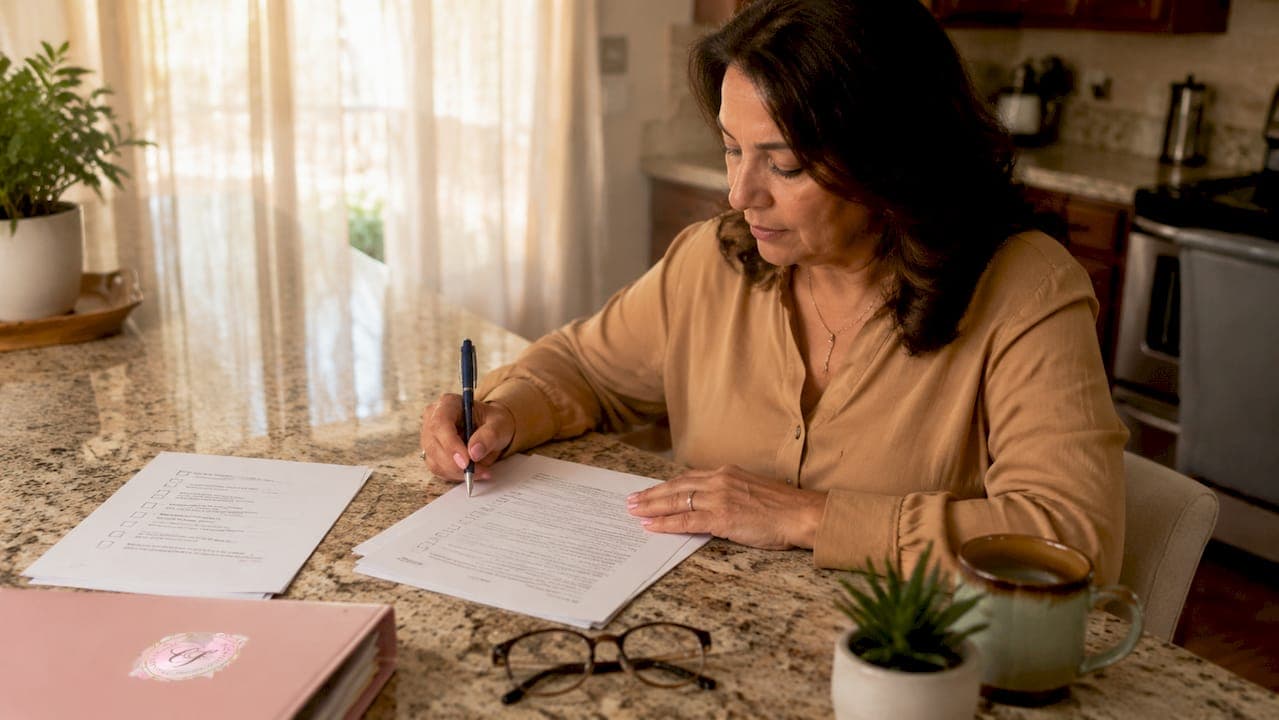
A bilingual power of attorney preparation checklist is a step-by-step tool that confirms your document meets Florida's legal standards and that every party fully understands it in both languages. Under Florida Statutes Chapter 709, a valid power of attorney requires the principal's signature, two disinterested witnesses, and a notary public. Missing any one of those elements voids the document entirely. For immigrants and self-represented litigants in Florida, a structured checklist is not optional. It is the difference between a document that works when you need it and one that gets rejected at the worst possible moment.
1. How to use a bilingual power of attorney preparation checklist
The term "bilingual power of attorney preparation checklist" describes a practical verification tool, not a legal term of art. The recognized legal document is simply a "power of attorney" or, when it survives the principal's incapacity, a "durable power of attorney." Using both terms matters because banks, hospitals, and courts recognize the formal name. The checklist format helps you confirm that every required element is present before you sign anything.
Florida law is specific. A power of attorney that skips the notary or uses only one witness is legally void, regardless of how carefully the rest of the document was written. That is why working through a checklist before the signing appointment protects you from a costly redo.
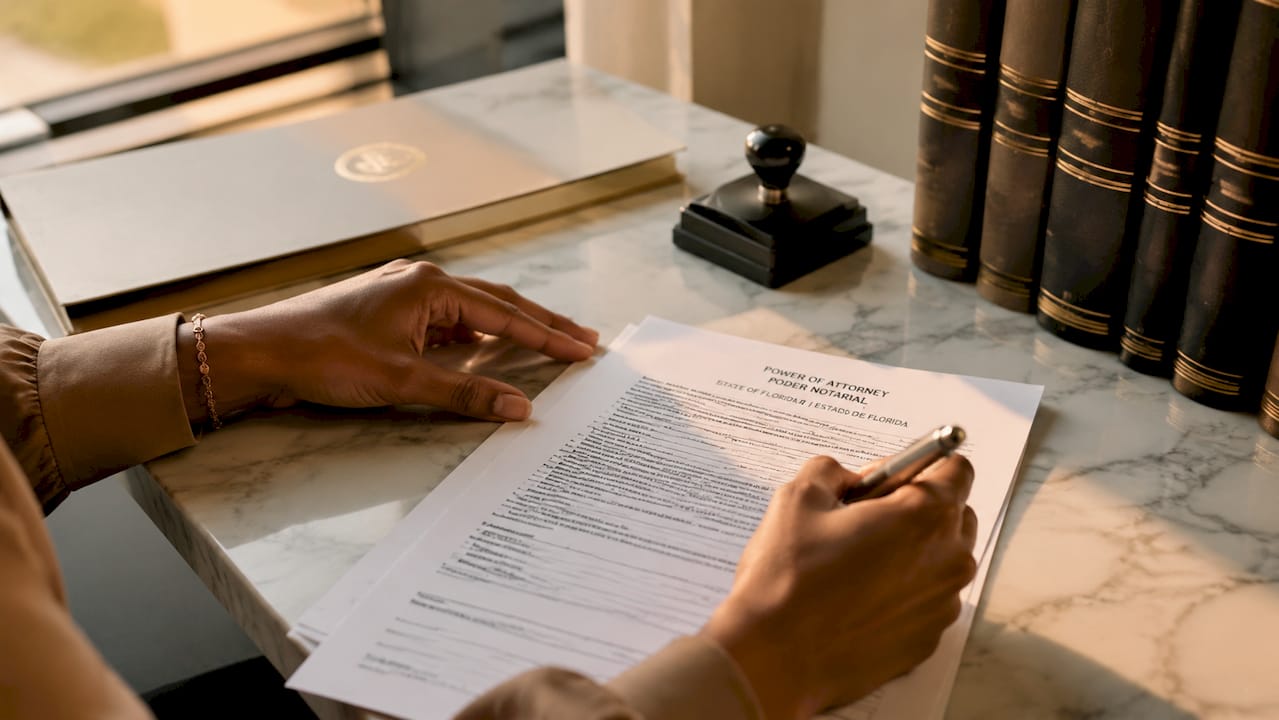
2. Select the right agent and backup agents
Agent selection is the single most consequential decision in the entire process. Your agent, also called the attorney-in-fact, will have legal authority to act on your behalf. That authority can cover your bank accounts, real estate, medical decisions, or all three.
Choose someone you trust completely and who has the practical competence to handle the tasks you are delegating. Competence matters as much as trust. An agent who is honest but disorganized can still cause serious problems when managing financial accounts or coordinating medical care.
For bilingual households, consider whether your agent can communicate effectively in both languages. If your agent speaks only English but your doctors, family members, or financial contacts primarily speak Spanish, that gap creates real friction in an emergency.
Name at least one successor agent. If your first choice becomes unavailable due to illness, relocation, or personal conflict, a successor agent steps in without requiring you to execute a new document.
- Primary agent: someone you trust with full decision-making authority
- Successor agent: a backup who activates only if the primary agent cannot serve
- Bilingual ability: preferred but not legally required; document any language limitations
Pro Tip: Never name a witness as your agent. Florida law requires witnesses to be disinterested, meaning they cannot benefit from the document. Naming a witness as agent creates a conflict that can invalidate the entire POA.
3. Key legal execution requirements under Florida law
Florida's execution rules are strict, and failure to follow them nullifies the document completely. The principal must sign the POA in the presence of a notary public and two witnesses who are not named as agents in the document.
Both witnesses must be disinterested, meaning they have no financial stake in the document. A family member who stands to inherit from you is not automatically disqualified as a witness, but anyone named as a beneficiary in the document is. The safest practice is to use two people who have no connection to the document's contents.
The notary's role goes beyond stamping a seal. The notary confirms your identity, verifies that you are signing voluntarily, and records the transaction. Florida also allows remote online notarization, which is useful for clients who cannot travel. You can review the full Florida notarization requirements to confirm which method fits your situation.
Hot powers require explicit language
Nine categories of authority under the Uniform Power of Attorney Act require express, specific language in the document. These are called "hot powers" because they carry significant risk of abuse. General wording does not activate them.
Hot powers include:
- Creating, amending, or revoking a trust
- Making gifts of the principal's property
- Changing beneficiary designations on life insurance or retirement accounts
- Delegating authority to another person
- Waiving the principal's right to be a beneficiary of a joint and survivor annuity
If you want your agent to have any of these powers, the document must say so explicitly. A generic template will not include them by default.
Pro Tip: Generic online templates frequently omit Florida-specific hot powers and durable language. A document that lacks durable language becomes ineffective the moment you are incapacitated, which is often exactly when you need it most.
| Execution element | Florida requirement |
|---|---|
| Principal's signature | Required at signing |
| Witnesses | Two disinterested adults |
| Notary public | Must be present at signing |
| Durable language | Required to survive incapacity |
| Hot powers | Must be explicitly listed |
4. Best practices for bilingual communication and translation
Being fluent in two languages does not guarantee that a client understands the legal nuances of a power of attorney. Bilingual preparation must prioritize comprehension, not just translation. A word-for-word translation of legal English into Spanish can still leave a client confused about what they are actually authorizing.
The goal is to confirm that the principal understands what the document does, who the agent is, and what powers are being granted. That confirmation requires more than handing over a translated copy.
"Asking clients to restate concepts in their own words increases trust and comprehension in bilingual legal communications. A client who can explain what their agent is allowed to do has genuinely understood the document."
Automated translation tools like Google Translate are not appropriate for legal documents. They miss context, mistranslate legal terms, and produce output that no court or institution will accept as a certified translation. Use a qualified legal translator or a certified translation service for any document that will be submitted to a third party.
- Comprehension check: ask the principal to explain the agent's powers in their own words
- Certified translation: required for any document submitted to courts, banks, or government agencies
- Bilingual review session: walk through the document section by section in the principal's preferred language
- Avoid automated tools: machine translation introduces errors that can change the meaning of critical clauses
Pro Tip: Ask your client to paraphrase the next steps after each section of the document review. If they cannot restate what they just heard, they have not understood it. Pausing to confirm comprehension prevents disputes later.
5. Step-by-step bilingual power of attorney preparation checklist
A complete POA checklist covers agent selection, document type, scope of authority, execution requirements, and storage. Working through each step in order prevents the most common errors.
Step 1: Choose your agent and successor agent Identify your primary agent and at least one backup. Confirm that neither is listed as a witness.
Step 2: Determine the type of power of attorney Florida recognizes several types. A durable financial POA covers property and financial decisions and survives incapacity. A health care surrogate designation covers medical decisions. A springing POA activates only upon a specific event, such as incapacity. Choose the type that matches your actual needs.
Step 3: List the specific powers you are granting Write out every authority you want your agent to have. Do not rely on general language. If you want your agent to manage real estate, say so. If you want them to make gifts, that hot power must be explicitly stated.
Step 4: Include durable language Add the statutory durable language required under Florida Statutes Chapter 709. Without it, the POA ends the moment you become incapacitated.
Step 5: Schedule a bilingual document review Before signing, review the entire document in your preferred language. Confirm that the translation is certified and that you can explain each section in your own words. A bilingual notary appointment can combine the review and execution into a single session.
Step 6: Execute with a notary and two witnesses Sign the document in front of a notary public and two disinterested witnesses. All three must be present at the same time. Remote online notarization is permitted in Florida if in-person signing is not possible. Review the process for notarizing a power of attorney in Florida before your appointment.
Step 7: Store originals and distribute copies Keep the original in a secure location. Give certified copies to your agent, your bank, your doctor, and any other institution that may need to act on it. A copy that cannot be verified is often rejected.
Step 8: Review and update after major life changes A power of attorney is not permanent by default. Review it after marriage, divorce, the death of a named agent, or a significant change in your financial situation. Update it whenever the named agent is no longer the right choice.
Key takeaways
A valid bilingual power of attorney in Florida requires explicit hot powers, durable language, two disinterested witnesses, and a notary, plus a bilingual review that confirms the principal's genuine comprehension.
| Point | Details |
|---|---|
| Florida execution is strict | Two disinterested witnesses and a notary are required; missing either voids the document. |
| Hot powers need explicit language | General wording does not grant authority over trusts, gifts, or beneficiary changes. |
| Comprehension beats translation | Ask the principal to restate each section to confirm real understanding, not just word-for-word translation. |
| Durable language is non-negotiable | Without it, the POA ends the moment the principal becomes incapacitated. |
| Review after life changes | Update the document after divorce, death of an agent, or major financial changes. |
What I have learned preparing bilingual POAs in South Florida
Working with Spanish-speaking clients in Naples and across South Florida, the most common mistake I see is not a missing signature. It is a missing conversation. Clients sign documents they do not fully understand because the preparer handed them a translation and assumed the job was done.
Clarity is not the same as translation. I have seen Spanish-speaking clients nod through an English explanation and sign without realizing their agent had authority to change their life insurance beneficiaries. That is a hot power, and it should never be buried in boilerplate.
The second most common problem is the generic template. Clients download a free form online, fill it in, and show up to a notary without two witnesses. The notary cannot fix that. The document has to be redone. Florida's rules on financial power of attorney notarization exist for good reason, and skipping steps to save time always costs more in the end.
My honest advice: treat the bilingual review as a required step, not a courtesy. Ask your client to explain what their agent can and cannot do. If they cannot answer that question, the document is not ready to sign.
— Cristina
Bilingual POA preparation made straightforward with Cflegalformhelp
Cflegalformhelp provides bilingual document preparation in English and Spanish for Florida residents who need a legally valid power of attorney without the cost of full attorney representation. Every document is prepared to meet Florida Statutes Chapter 709 requirements, including durable language, hot powers, and proper execution formatting.
Cflegalformhelp also handles Florida notarization and witness coordination, certified translations, and bilingual client reviews so you leave with a document you actually understand. Flat-fee pricing means no surprises. Services are available in person in Naples and remotely across Florida. Reach out to Cflegalformhelp to schedule your bilingual POA preparation appointment.
FAQ
What makes a power of attorney valid in Florida?
A Florida power of attorney is valid when the principal signs it in front of a notary public and two disinterested witnesses, as required by Florida Statutes Chapter 709. Missing the notary or either witness voids the document entirely.
What are hot powers in a Florida power of attorney?
Hot powers are specific authorities, such as making gifts, creating trusts, or changing beneficiary designations, that must be explicitly listed in the POA document. General language does not activate them under Florida law.
Do I need a certified translation for a bilingual power of attorney?
A certified translation is required any time the document will be submitted to a court, bank, or government agency. Automated translation tools are not accepted because they lack legal accuracy and official certification.
What is a durable power of attorney in Florida?
A durable power of attorney includes specific statutory language that keeps the document effective even if the principal becomes incapacitated. Without that language, the POA ends automatically upon incapacity, which defeats its most common purpose.
Can I use a generic online template for a Florida power of attorney?
Generic templates frequently omit Florida-specific requirements like hot powers and durable language, which makes them legally insufficient. A Florida-compliant document must follow the standards set in Florida Statutes Chapter 709 to be accepted by institutions.