

The green card application process includes two required stages: an immigrant petition that establishes your eligibility, and a green card application (Form I-485 or Form DS-260) that requests permanent residence. You will follow one of two paths: adjustment of status if you are already in the U.S. or consular processing if you are abroad. Find the correct forms on the USCIS green card page before you file anything.
TL;DR:
- Applicants must confirm their eligibility category and ensure their priority date is current before filing the green card application to avoid delays.
- Adjustment of status is suitable only for those physically present in the U.S. and who entered lawfully, whereas consular processing is required for most abroad applicants or those with unlawful entry.
- Filing concurrent petitions for employment-based categories can reduce processing time, but improper timing of the visa bulletin check or missing documentation causes most application stalls.
- Maintaining consistency and accuracy in all forms, documents, and deadlines, especially for medical exams and biometrics, is crucial to prevent RFEs and denials.
- Using official USCIS resources to verify procedures and working with flat-fee document preparers can streamline the process, but complex issues like inadmissibility require legal advice.
Table of Contents
- Green Card Application Process Explained: The Quick Checklist
- Adjustment of Status vs Consular Processing: Which Path Fits You?
- Step-by-Step Process: From Petition to Decision
- Category-Specific Notes: Family, Employment, Humanitarian, and Diversity
- Forms, Documents, and What the Process Costs
- Timelines, Priority Dates, and Reading the Visa Bulletin
- Common Reasons for Denial, Inadmissibility, and Waivers
- Prepare and File: Your Practical Next Steps
- How Cflegalformhelp Supports Applicants Through This Process
- Why Following the Official Steps Beats Guessing
- Get Help Preparing Your Green Card Paperwork
- Where to Verify the Official Process
- Sources
Green Card Application Process Explained: The Quick Checklist
Before you dig into the details, look at the process as a sequence. Skipping a step out of order is one of the most common reasons applications stall.
- Confirm your eligibility category (family, employment, humanitarian, diversity, or registry).
- Have your sponsor or employer file the immigrant petition (I-130, I-140, or I-730).
- Check the Visa Bulletin to confirm your priority date is current.
- File Form I-485 if you're in the U.S., or Form DS-260 through the National Visa Center if you're abroad.
- Attend your biometrics appointment.
- Complete the medical exam (Form I-693).
- Attend the interview, if one is scheduled.
- Receive a decision and, if approved, your green card.
Some categories allow you to file the petition and the green card application together, known as concurrent filing, which can shave months off your timeline.
Pro Tip: Print the Visa Bulletin chart for your category the same week you file your petition. Checking it monthly, instead of scrambling when USCIS sends a request, keeps you from missing your filing window.
Adjustment of Status vs Consular Processing: Which Path Fits You?
Adjustment of status lets you apply for a green card while remaining in the U.S., using Form I-485. Consular processing requires you to complete the final steps at a U.S. embassy or consulate in your home country, using Form DS-260. The path you qualify for depends heavily on how you entered the country.
To use adjustment of status, you generally need to be physically present in the U.S., and you must have been inspected and admitted or paroled at entry. If you entered without inspection, adjustment of status is usually off the table, and consular processing may trigger reentry bars that require a waiver.
- Adjustment of status: no travel required, but leaving the U.S. without advance parole while your case is pending can cause USCIS to consider your I-485 abandoned.
- Consular processing: required for most applicants living abroad, and mandatory for anyone who cannot meet the inspected-and-admitted requirement.
- Concurrent filing with the immigrant petition is often available for adjustment of status; consular processing follows a different sequence through the National Visa Center.
Choosing the wrong path is one of the costliest mistakes in this process. Picking the wrong path can add months to a case, or create a reentry bar that only a waiver can fix.
Step-by-Step Process: From Petition to Decision
Every green card case, regardless of category, moves through the same broad stages, even though the paperwork and timing shift depending on who is petitioning for you.
Step 1: The immigrant petition. A family member usually files Form I-130, an employer files Form I-140, and refugee or asylee relatives may use Form I-730. Some employment-based applicants, such as those with extraordinary ability, can self-petition. Errors here, like mismatched names or missing relationship evidence, are a leading cause of Requests for Evidence, so review the form carefully before submission.
Step 2: Check visa availability. An approved petition does not automatically mean you can file the next form. You need a current priority date on the Visa Bulletin. Employment categories and family preference categories move at very different speeds, and country of birth affects your wait too.
Step 3: File the green card application. If you're in the U.S. and eligible, you file Form I-485. If you're abroad, your case moves to the National Visa Center for Form DS-260. Certain employment categories allow you to file I-140 and I-485 at the same time, which is one of the more valuable shortcuts in this entire process.
Step 4: Biometrics. After filing I-485, you'll typically get a notice for an Application Support Center appointment, where USCIS collects your fingerprints, photo, and signature for identity verification and background checks.

Step 5: Medical exam. Form I-693 must be completed by a designated civil surgeon. Timing matters here, since results have a limited validity window before they expire relative to your adjudication date.
Step 6: The interview. Bring original documents, not just copies, and expect both spouses to attend if the case is marriage-based. Officers commonly ask about your relationship history, your job duties, or the events described in your petition.
Step 7: RFEs and decision. If USCIS needs more evidence, you'll receive a Request for Evidence with a firm response deadline. Missing it can lead to denial, so treat every RFE as time-sensitive.
Step 8: Approval and card issuance. Once approved, your physical green card usually arrives by mail within a few weeks.
Category-Specific Notes: Family, Employment, Humanitarian, and Diversity
Your category changes far more than just which petition form you use. It shapes your evidence list, your filing sequence, and sometimes your entire timeline.
- Family-based: Sponsors file Form I-864, the Affidavit of Support, to show they can financially support the immigrant. Immediate relatives of U.S. citizens face no annual visa cap, while preference categories (siblings, adult children) wait behind the Visa Bulletin.
- Employment-based: EB-1, EB-2, and EB-3 applicants often qualify for concurrent filing of I-140 and I-485. Form I-485 Supplement J confirms the job offer is still valid at the time of adjudication, a step many applicants overlook.
- Humanitarian: Refugees and asylees follow a distinct pathway with different waiting periods, and VAWA self-petitioners can file without the abuser's knowledge or involvement.
- Diversity and registry: Diversity visa selectees face a strict annual deadline tied to their selection year, while registry applicants rely on a different, much older set of continuous-residence evidence.
Forms, Documents, and What the Process Costs
Every case relies on a similar core set of forms and evidence, even though the specific combination shifts by category.
- Common forms: I-130, I-140, I-485, DS-260, I-864, I-693, and often I-765 (work authorization) and I-131 (travel document).
- Document checklist: government-issued ID, birth and marriage certificates, valid passport, Form I-94 arrival record, and any prior immigration paperwork.
- Cost categories: government filing fees, the ASC biometrics fee, the civil surgeon's medical exam charge, and certified translation or copy costs for foreign-language documents.
Fees change periodically, so confirm current amounts directly on the USCIS forms pages rather than relying on older guides. A document checklist built for green card filings can help you track what you still need before you file.
Timelines, Priority Dates, and Reading the Visa Bulletin
Processing times vary widely by category, service center, and how complete your filing is, so treat any timeline estimate as a range, not a promise.
Your priority date, generally the date your petition was filed, determines your place in line. An approved petition is necessary but not sufficient; your priority date must also be current before you can file or complete your final step. Family and employment categories move at different speeds, and your country of birth affects wait times within each category.
Pro Tip: Check the Visa Bulletin on the first business day of each month, since cutoff dates can jump forward or retreat without warning, especially in oversubscribed categories.
Common Reasons for Denial, Inadmissibility, and Waivers
Certain issues surface again and again in denied cases, and most are avoidable with early planning.
- Criminal history, health-related grounds, and prior immigration violations are the most frequent inadmissibility triggers.
- Public charge concerns can arise when a sponsor's I-864 evidence looks thin or inconsistent.
- Waivers like Form I-601 (waiver of grounds of inadmissibility) or Form I-212 (permission to reapply after removal) exist for specific, documented circumstances.
- An RFE asks for more evidence and gives you a deadline; a denial ends the case unless you appeal or refile.
Pro Tip: If your case involves a prior removal order, a criminal record, or a waiver, talk to an accredited representative or immigration attorney before filing. Document preparers can assist with paperwork, but they cannot give legal advice on complex inadmissibility issues.
Prepare and File: Your Practical Next Steps
- Gather originals and certified translations for every foreign-language document now, not the week before your interview.
- Time your medical exam and biometrics appointment so results stay valid through adjudication.
- Use consistent names, dates, and addresses across every form. Small mismatches trigger unnecessary RFEs.
- Keep a folder, physical or digital, of every USCIS notice and receipt number so you can track your case status at any point.
How Cflegalformhelp Supports Applicants Through This Process
This guide was built with input from Cristina Fernandez, a certified legal document preparer and immigration paralegal who has spent years helping applicants organize green card filings correctly the first time. Cflegalformhelp offers downloadable checklists, bilingual document preparation, and flat-fee support for the paperwork stage of this process, without replacing the legal advice an attorney provides in complex cases.
Why Following the Official Steps Beats Guessing
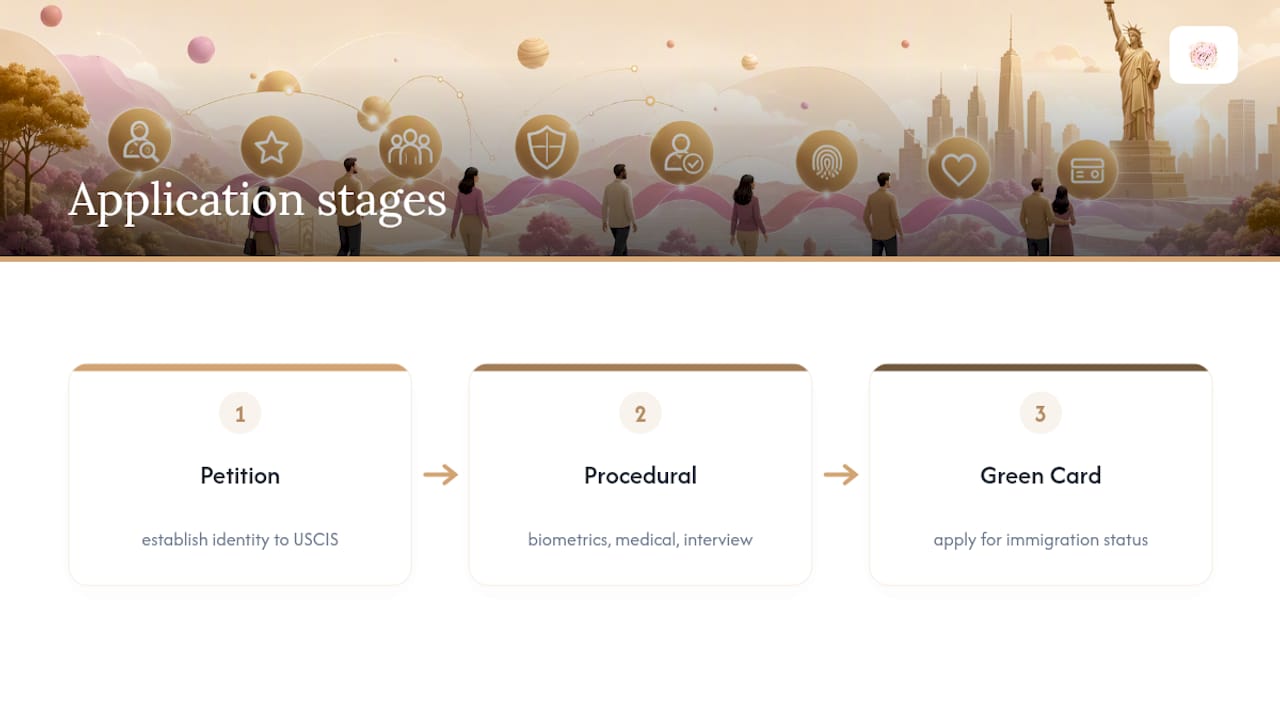
Most of the panic around green card applications comes from treating it as one giant, mysterious process instead of two clear stages with a checklist attached. The petition establishes who you are to USCIS. The green card application asks for status. Everything else, biometrics, medical exams, interviews, is procedural filler between those two milestones.
Where I see applicants lose months isn't the paperwork itself. It's misreading the Visa Bulletin or assuming an approved petition means they can file immediately. That single misunderstanding causes more delayed and rejected filings than any missing document ever does.
The conventional advice to "just follow the checklist" undersells how much category selection matters. A family-based applicant and an EB-2 employment case are following completely different clocks, and treating them the same way is where good intentions turn into denied filings. Get your category and your priority date right before you touch a single form.
— Cristina
Get Help Preparing Your Green Card Paperwork
Cflegalformhelp is the practical alternative to hiring a full-service immigration attorney when what you actually need is accurate, affordable help completing your forms. Bilingual staff prepare immigration paperwork at a flat fee, so you know the cost upfront instead of watching a retainer grow with every phone call.
Document preparation makes sense when your case is straightforward, family petitions, employment-based filings without complicated history, or renewal paperwork, and you want someone who understands the forms without paying attorney hourly rates. If your case involves inadmissibility, a prior denial, or a waiver, an immigration attorney is still the right call, and Cflegalformhelp will tell you that directly rather than take on a case outside its scope.
Start by reviewing the immigration forms help page to see exactly which forms Cflegalformhelp can help you prepare, and request your flat-fee quote before you file.
Where to Verify the Official Process
Confirm every step against primary sources: the USCIS green card overview, the adjustment of status procedures page, and current biometric appointment guidance. Pair those with the documents checklist and medical exam guide before you file.
This article is general information, not a substitute for advice from a qualified lawyer. Consult a qualified legal professional about your own circumstances before acting on anything here.