

An affidavit is a sworn, written statement of facts that courts treat as evidence in legal proceedings. Before you read further, here are three things that matter most:
- Common uses: Affidavits support court motions, prove identity, confirm service of legal papers, and present financial facts in family law cases.
- Notarization required: You must sign in front of an authorized officer (usually a notary public or commissioner of oaths) who witnesses your oath or affirmation.
- Perjury risk: Lying in an affidavit is a crime. Under 18 U.S.C. § 1621, willfully making a false sworn statement in a federal matter can result in criminal perjury charges.
Key Takeaways
An affidavit is a sworn written statement used as evidence in court, and its legal force depends entirely on truthfulness, proper notarization, and correct formatting.
| Point | Details |
|---|---|
| Core definition | An affidavit is a sworn, written statement of facts recognized as evidence in legal proceedings. |
| Notarization is required | Sign only in front of an authorized officer; never pre-sign, and bring valid photo ID to the appointment. |
| Perjury risk is real | False sworn statements can result in criminal charges under statutes like 18 U.S.C. § 1621 and damage your case. |
| Format determines admissibility | Missing a jurat, case caption, or exhibit label can cause a court to reject your affidavit entirely. |
| Cflegalformhelp | Offers flat-fee affidavit preparation, mobile notarization, and bilingual support for self-represented filers. |
Table of Contents
- What is an affidavit court document, and how does it differ from oral testimony?
- Why are affidavits used, and what are the most common types?
- Who can make an affidavit, and who is authorized to administer the oath?
- What must an affidavit contain: format, essential elements, and exhibits
- Notarization: swearing vs. affirming, remote options, and permitted alternatives
- How affidavits are filed, served, and used in court proceedings
- What happens when an affidavit contains false statements?
- When should you consult a lawyer or document-prep service?
- Printable checklist and sample wording for your affidavit
- How Cflegalformhelp can help you prepare and notarize your affidavit
- Sources
What is an affidavit court document, and how does it differ from oral testimony?
An affidavit is a formal written statement where you, the affiant (also called the deponent), voluntarily declare under oath or affirmation that everything you've written is true to the best of your knowledge. Courts treat it as evidence, sometimes carrying the same weight as in-person testimony.
The key difference from oral testimony is where and how the statement is made. Oral testimony happens in the courtroom, in real time, with the opposing side able to question you immediately. An affidavit is prepared outside the courtroom, signed before an authorized officer, and submitted as a document. Courts often prefer affidavits for procedural matters, uncontested facts, or situations where a witness cannot appear in person.
That said, affidavits have a real limitation: they are not automatically subject to live cross-examination. If the opposing party challenges your affidavit, the court may order you to appear and testify. For high-stakes or heavily contested matters, a judge may require live testimony regardless of what you've submitted in writing.
Why are affidavits used, and what are the most common types?
The primary purpose of an affidavit is to present facts to a court in sworn form, conveniently and without requiring a witness to appear in person. Courts expect affidavits to follow prescribed formats, be sworn before an authorized officer, and be filed according to court directions.
Here are the most common affidavit types and when each typically applies:
- Affidavit of service: Confirms that legal documents were delivered to another party. Used whenever a court requires proof that someone was properly notified.
- Affidavit of identity: Verifies who you are, often used in immigration cases, estate proceedings, or when a name discrepancy appears on records.
- Affidavit of facts: A general-purpose sworn statement presenting facts relevant to a dispute, motion, or application.
- Affidavit of support: Used in immigration proceedings to show that a sponsor can financially support a visa applicant.
- Evidence-in-chief affidavit: Replaces oral examination-in-chief in some civil proceedings, where the witness's written statement stands as their direct testimony.
- Financial affidavit: Discloses income, assets, and liabilities in family law cases such as divorce or child support hearings.
Courts may still require live testimony when credibility is directly at issue, when facts are genuinely disputed, or when the opposing party successfully applies to cross-examine your affidavit evidence. Always check the specific rules for your proceeding before assuming a written affidavit will be sufficient.
Who can make an affidavit, and who is authorized to administer the oath?
Anyone with personal knowledge of the facts can make an affidavit, provided they have legal capacity (generally, they must be an adult of sound mind). You can only swear to what you personally know or observed. Statements based on what someone else told you (hearsay) are generally not permitted unless you clearly identify the source and explain why you are relying on it.
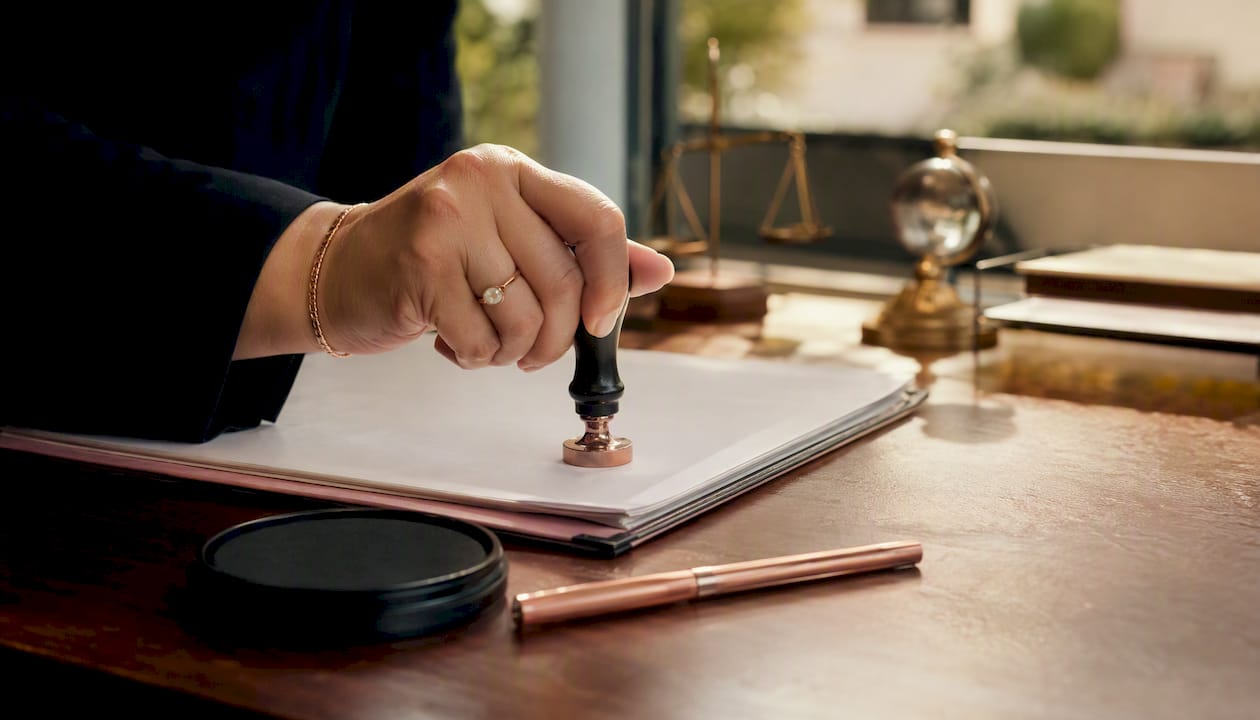
The person who administers your oath must be officially authorized. The table below shows the most common authorized officers and where each is typically used.
| Authorized Officer | Typical Setting | Notes |
|---|---|---|
| Notary public | U.S. domestic courts, general filings | Most widely used; can notarize most affidavit types |
| Commissioner of oaths | Canadian courts, some Commonwealth jurisdictions | Authorized specifically to administer oaths for court documents |
| Court registry official | Filing at the court counter | Some courts allow registry staff to witness affidavits |
| Judge or magistrate | In-court proceedings | Rarely used for standard affidavits; more common for emergency orders |
| U.S. consular officer | International filings, overseas affiants | Used when the affiant is abroad and needs a U.S.-recognized officer |
Rules vary significantly by jurisdiction. What works in a Florida state court may not satisfy a federal court or a court in another country. Always check your court's practice directions or local rules before selecting who will administer your oath. Understanding the differences between notary, witness, and signer roles can also help you avoid choosing the wrong officer for your situation.
What must an affidavit contain: format, essential elements, and exhibits
A complete affidavit includes the case caption and court details, the affiant's identity, numbered factual paragraphs, a statement of truth, the affiant's signature, a jurat (notary block), and any exhibits referenced in the text. Missing any of these elements can cause a court to reject the document entirely.
Step-by-step drafting guidance confirms the standard structure: identify the matter and parties, present facts in numbered paragraphs, attach exhibits labeled Exhibit A, Exhibit B, and so on, add a statement of truth, and complete a jurat before an authorized officer.
Affidavit drafting checklist:
- Caption/case details: Court name, case number, names of all parties.
- Affiant identification: Full legal name, address, and occupation.
- Numbered factual paragraphs: Each paragraph covers one fact or related group of facts, stated in plain language.
- Exhibit references: Each exhibit is labeled (e.g., "Exhibit A") and referenced in the relevant paragraph ("attached hereto as Exhibit A").
- Statement of truth: A sentence confirming the contents are true to the best of your knowledge.
- Affiant signature: Signed in the presence of the authorized officer, not before.
- Jurat/notary block: Completed and signed by the authorized officer after witnessing your oath.
A standard jurat looks like this:
When referencing an exhibit, use a line such as: "Attached hereto and marked as Exhibit A is a true copy of the lease agreement dated March 1, 2025." Keep that language consistent throughout the document.
Notarization: swearing vs. affirming, remote options, and permitted alternatives
Affidavits must ordinarily be sworn or affirmed before an authorized officer, who then completes the jurat. That step is what transforms a written statement into a legally recognized sworn document. Notarized documents carry evidentiary weight precisely because the officer certifies that the affiant appeared, was identified, and took an oath.
Swearing vs. affirming: Swearing involves taking a religious oath (typically with a hand on a Bible or other sacred text). Affirming is a secular alternative that carries identical legal weight. You can choose to affirm if you have no religious objection to swearing or simply prefer the secular form. Either way, the legal obligation to tell the truth is the same.
How to get your affidavit notarized:
- Prepare your affidavit fully but do not sign it yet.
- Bring a valid, government-issued photo ID to your appointment.
- Appear before the notary or commissioner and confirm your identity.
- Read or review the document in the officer's presence.
- Take the oath or make the affirmation.
- Sign the affidavit in the officer's presence.
- The officer completes and signs the jurat, then stamps or seals the document.
Pro Tip: Never sign your affidavit before meeting the notary. Most authorized officers will refuse to notarize a pre-signed document and will ask you to bring an unsigned copy. A pre-signed affidavit is effectively invalid because the officer cannot certify they witnessed your signature.
Remote notarization is now permitted in a growing number of U.S. states, allowing you to complete the process via secure video call. Some jurisdictions also allow unsworn declarations under penalty of perjury as an alternative to notarized affidavits in certain proceedings. Whether an unsworn declaration is accepted depends entirely on the applicable statute or court rule for your specific case, so confirm this before skipping the notarization step.
How affidavits are filed, served, and used in court proceedings
Once sworn and signed, an affidavit is typically served on the other parties in the case and then filed at the court registry, following the court's specific directions. Local court rules often set firm deadlines for service and filing, and missing them can mean the court simply will not consider your evidence.
The general sequence looks like this:
- Serve first: Deliver a copy of the sworn affidavit to every other party in the proceeding, using the method the court requires (personal service, email, mail, or process server, depending on the rules).
- File with the court: Submit the original sworn affidavit, along with any exhibits, to the court registry. Pay any applicable filing fee and keep your stamped copy.
- Meet the deadline: Most courts require affidavits to be filed a set number of days before the hearing. Check your court's scheduling order or practice directions for the exact timeframe.
- Attend the hearing: The judge may rely on your affidavit as written, or the opposing party may apply to cross-examine you on its contents. Be prepared to appear if ordered.
Once filed, your affidavit becomes part of the court record. If the opposing party believes it contains errors or inadmissible material, they can object or apply to have specific paragraphs struck. Courts may also use your affidavit to assess your credibility, particularly if your oral testimony later differs from what you wrote. For step-by-step filing guidance specific to Florida proceedings, the Florida small claims court filing guide offers a useful reference.
What happens when an affidavit contains false statements?
Lying in an affidavit is not a technicality. It is a crime. Under 18 U.S.C. § 1621, willfully making a false sworn statement in a matter within federal court jurisdiction constitutes perjury. State laws carry similar penalties. Beyond criminal exposure, a false affidavit can destroy your credibility in the very proceeding where you need it most.
"The most critical aspect of an affidavit is truthfulness. False statements can amount to perjury and harm a case in ways that are very difficult to undo." Supreme Court of British Columbia
Courts also use affidavits to impeach witnesses. If you swear to one version of events in your affidavit and then say something different on the stand, the opposing lawyer will almost certainly use that inconsistency against you. Even an honest-sounding explanation for the discrepancy can undermine your case.
If you discover an honest mistake after filing, act quickly. File a corrected affidavit or an affidavit of correction, notify the court and all other parties, and seek legal advice before the hearing. Courts generally treat a prompt, voluntary correction more favorably than a discrepancy that surfaces during cross-examination.
When should you consult a lawyer or document-prep service?
Many straightforward affidavits, such as an affidavit of service or a simple identity affidavit, can be prepared without a lawyer. But the stakes and complexity of your situation should drive that decision.
Hire a lawyer when:
- The facts are legally complex or involve criminal exposure.
- You expect to be cross-examined on the affidavit's contents.
- The proceeding involves custody, immigration status, or significant financial assets.
- You are responding to a serious allegation and the affidavit is your primary defense.
- The matter is in federal court or involves multiple jurisdictions.
Even if you don't hire a lawyer, a brief professional review of your affidavit is worth considering. Courts may reject affidavits that don't follow technical rules or required formats, and a single formatting error can cost you the hearing.
Common affidavit mistakes to avoid:
- Signing the document before appearing before the notary.
- Including hearsay statements without identifying the source.
- Using argumentative or opinion-based language instead of factual statements.
- Failing to attach or properly label exhibits referenced in the text.
- Using incorrect jurat language for the jurisdiction where the affidavit will be filed.
- Omitting the case number or court caption from the header.
For self-represented litigants, the DIY filing guides at Cflegalformhelp offer practical templates and step-by-step instructions that reduce the risk of these errors.
Printable checklist and sample wording for your affidavit
This checklist gives you a clear set of items to verify before you hand your affidavit to the notary. Work through it in order.
Pre-notarization checklist:
- Court name, case number, and party names appear in the caption.
- Your full legal name, address, and occupation are stated in the opening paragraph.
- All facts are written in numbered paragraphs, one topic per paragraph.
- Every statement reflects your personal knowledge.
- Exhibits are attached and labeled (Exhibit A, Exhibit B, etc.).
- Each exhibit is referenced in the body of the affidavit.
- A statement of truth appears before the signature line.
- The document is unsigned (you will sign in front of the notary).
- You have a valid government-issued photo ID to bring to the appointment.
- The jurat block is present and blank, ready for the officer to complete.
Sample opening paragraph:
"I, [Full Legal Name], of [Address], [Occupation], make oath (or affirm) and say as follows:"
Sample exhibit reference line:
"Attached hereto and marked as Exhibit A is a true copy of the bank statement dated February 15, 2025."
Sample jurat block:
"Sworn (or affirmed) before me at [City, State], this [day] day of [Month], [Year]. [Signature of Notary/Commissioner]. [Printed Name and Title]. My commission expires: [Date]."
For practical drafting guidance, including how to structure numbered paragraphs and attach exhibits correctly, Catalyst Legal's step-by-step breakdown is a solid reference.
Pro Tip: Label your exhibits before the appointment. Write "Exhibit A" clearly on the first page of each attachment, and bring extra copies. Some courts require a copy for each party plus one for the court file.
A document preparer's perspective on affidavits
Most people who come to me with affidavit questions are not confused about what an affidavit is. They are confused about what it needs to say and whether they've said it correctly. That distinction matters in practice.
The two mistakes I see most often are pre-signing and vague exhibit labeling. Someone prepares a careful, well-organized affidavit, signs it at home because it feels finished, and then arrives at the notary's office with a document the notary cannot legally certify. The fix is simple but the delay is real. The second mistake is attaching documents without labeling them or referencing them in the body text. A court that receives an affidavit with three unlabeled attachments has no way to know which paragraph each one supports.
If you are self-represented, spend five minutes with the checklist in this guide before your notary appointment. And if the proceeding involves anything with lasting legal consequences, a one-time professional review is far less expensive than a rejected filing or a rescheduled hearing.
How Cflegalformhelp can help you prepare and notarize your affidavit
Preparing an affidavit correctly the first time saves you from rescheduled hearings, rejected filings, and the stress of starting over. Cflegalformhelp offers flat-fee legal document preparation and mobile notary services that cover the full affidavit process, from drafting to sworn notarization, without the cost of retaining an attorney.
Services available through Cflegalformhelp include:
- Affidavit drafting and document preparation in English and Spanish.
- In-person and mobile notarization, with remote notarization where permitted.
- Certified translations for documents filed in multilingual proceedings.
- Filing assistance and guidance on serving other parties correctly.
This is particularly useful if you are self-represented, working under a tight court deadline, or navigating an immigration-related affidavit. To get started, visit the legal document preparation page or book a mobile notary appointment directly.
Sources
These are primary references to check for jurisdiction-specific requirements before preparing or filing your affidavit.
- How to prepare an affidavit
- 18 U.S. Code § 1621 - Perjury; subornation of perjury
- How to Write an Affidavit: A Simple Step-by-Step Breakdown – Catalyst Legal
This guide provides general information about affidavit court documents and is not a substitute for legal advice. Rules vary by jurisdiction. Confirm current requirements with your local court or a qualified legal professional before filing.